Bugatti Tourbillon Passenger Ride Reveals a More Expressive Hypercar
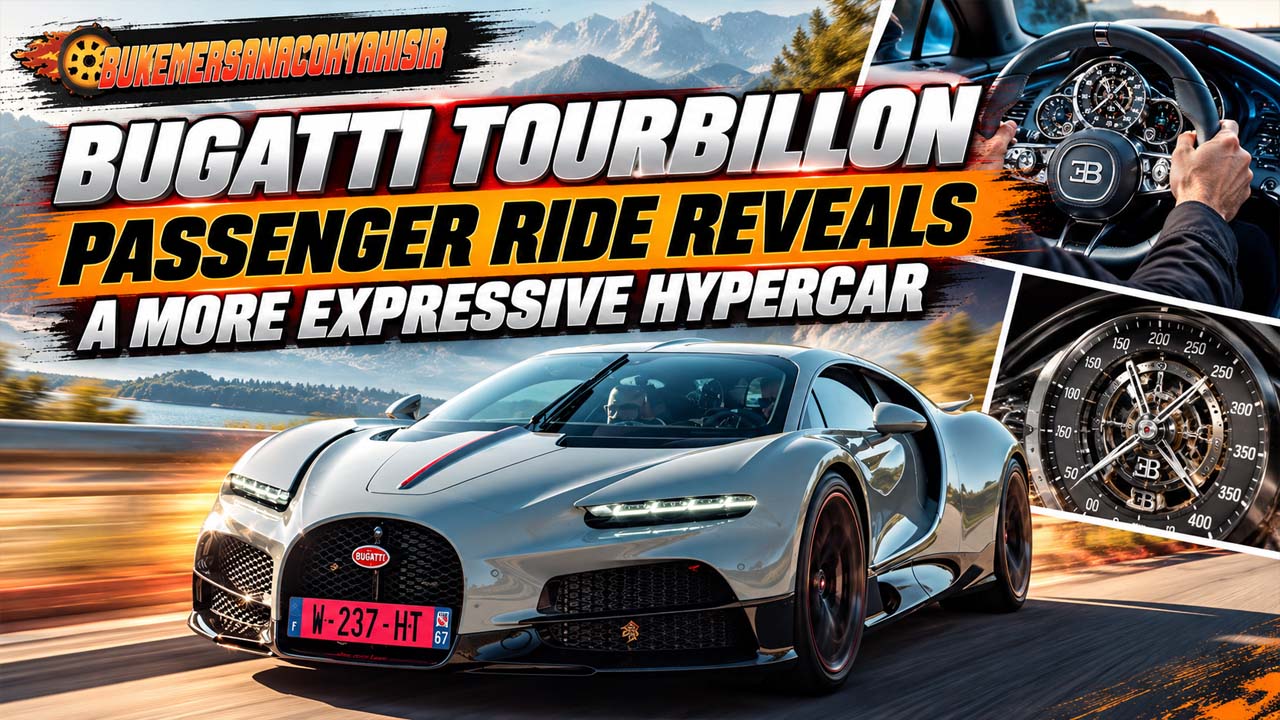
Bukemersanacokyakisir – The Bugatti Tourbillon passenger ride described by Top Gear offers a revealing introduction to the Chiron’s successor. With Mate Rimac driving, the experience begins with a familiar sense of mechanical presence before developing a distinctly different character as engine speeds rise. The central attraction is a naturally aspirated V16, supported by electric motors rather than turbochargers. However, this is a passenger assessment, so impressions of handling remain observations from the other seat. Even within that limitation, the account suggests a clear shift in priorities. Acceleration still matters enormously, but sound, response, and involvement increasingly shape the Tourbillon’s identity.
A Naturally Aspirated V16 Changes the Conversation
The Tourbillon’s 8,355cc V16 produces a quoted 986bhp and 664lb ft before electric assistance enters the picture. Developed with Cosworth, it replaces the quad-turbocharged W16 associated with Bugatti’s previous modern road cars. That change is significant beyond the engine layout. Without turbochargers shaping its delivery, the V16 offers a different relationship between throttle input, engine speed, and sound. According to the passenger account, its personality becomes particularly intense above roughly 3,000rpm. Rather than simply adding more performance to a familiar formula, Bugatti has chosen a powertrain that changes how the car communicates its speed.
Three Electric Motors Support the Combustion Experience
A 25kWh battery supplies three electric motors, including one for each front wheel. Their contribution gives the Tourbillon electric capability while supporting the petrol engine during acceleration. Nevertheless, the reported experience places the V16 firmly in the foreground. The electric assistance feels integrated into the delivery rather than becoming the defining sensation. This distinction is interesting because hybrid technology can sometimes dominate discussions about a car’s character. Here, it appears to expand the engine’s possibilities. The motors provide additional flexibility, while the combustion engine supplies the sound and mechanical drama that distinguish the experience.
Electric Running Offers a Quieter Side
During the journey through villages near Molsheim, Rimac switches the car into electric operation. The change replaces the V16’s audible presence with a much quieter mode of travel. Bugatti promises approximately 37 miles of electric range, although that figure should not be treated as a result measured during this passenger ride. The practical attraction is straightforward: a dramatic hypercar can move through populated areas without continuously broadcasting its engine. Meanwhile, the contrast makes restarting the V16 feel more significant. Electric running therefore adds another personality to the car, rather than merely serving as a supporting performance feature.
Acceleration Feels Different When Sound Joins the Numbers
Bugatti quotes a 0–124mph time of five seconds for the Tourbillon. However, the passenger account suggests that the sensation involves considerably more than the stopwatch. As revs build, the engine’s sound changes from a deep pulse into an increasingly urgent, layered voice. Opening the windows reportedly intensifies that experience further. This is where the Tourbillon’s approach becomes especially compelling: acceleration becomes something heard and felt through several changing stages. Nevertheless, those impressions remain subjective. They explain why the car may feel exceptionally dramatic without proving that it accelerates faster than every rival.
Combustion-Only Operation Reveals Another Personality
One unusual feature described during the ride is the ability to select combustion-only operation. In that setting, the V16 drives the rear wheels without the electric contribution defining the experience. Consequently, the Tourbillon can offer a different balance of performance and response while retaining its engine soundtrack. Rimac also explains that controllable oversteer formed part of the development brief. That ambition suggests an interest in adjustability alongside outright speed. However, the account does not amount to an independent assessment of its behaviour at the limit. The interesting point is the philosophy: Bugatti wants this car to engage as well as impress.
Also Read : Protests Sweep Across Europe Again as Italy and Portugal Face Growing Unrest
Packaging Helps Explain the New Direction
The engine sits well forward within the rear section to help centralise mass. Meanwhile, moving the gearbox behind it allows a slimmer central tunnel and brings the occupants closer together. The narrower arrangement also supports a reduced frontal area. According to the account, the V16, dual-clutch gearbox, and associated electric motor together weigh approximately 430kg—similar to the previous W16 engine alone. That comparison concerns specific assemblies, rather than the complete vehicles. Even so, it illustrates the engineering effort behind the new layout. The hybrid system adds complexity, but packaging and component design help manage its consequences.
Familiar Styling Conceals Significant Changes
The horseshoe grille, sweeping side signature, and exposed engine area preserve recognisable Bugatti cues. Nevertheless, closer inspection reveals details shaped by the new architecture. Large aerodynamic passages flank the comparatively narrow engine, while the rear diffuser gives the tail a strongly functional appearance. The featured car also wears the Equipe Pur Sang package, whose eight exhaust outlets make an immediate visual statement. From a design perspective, the contrast is effective: familiar signatures establish continuity, while the rear communicates greater intensity. The Tourbillon does not need to abandon its visual heritage to express a different mechanical character.
Mechanical Instruments Give the Cabin Its Own Spectacle
Inside, the instrument assembly provides a second focal point beyond the engine. It contains approximately 2,000 mechanical components yet weighs around 600 grams, according to the account. Rubies serve as low-friction, hard-wearing bearings within the mechanism. This approach creates visual interest through moving parts rather than relying entirely on screens. However, the cabin is not presented as flawless. The passenger reports discomfort with a ridge in the seat back and limited access to a convenient elbow rest. Those observations matter because they distinguish admiration for craftsmanship from an assumption that every ergonomic detail works equally well.
A New Bugatti Character Emerges from the Passenger Seat
The strongest impression is of a Bugatti becoming more expressive without losing its sense of stability. From the passenger seat, the Tourbillon appears more eager to change direction and more closely connected to the road than its predecessor. Those impressions still require a full driving assessment before becoming firm handling conclusions. Nevertheless, the underlying direction is clear within this account. The V16 shapes the experience, electric assistance broadens its abilities, and intricate mechanisms give the cabin a distinctive atmosphere. For a car associated with a quoted 277mph limit, the most interesting development may be how much it offers before approaching that speed.


Post Comment