Sanrivatti One Reimagines the Driving Seat With a Motorcycle-Style Cockpit
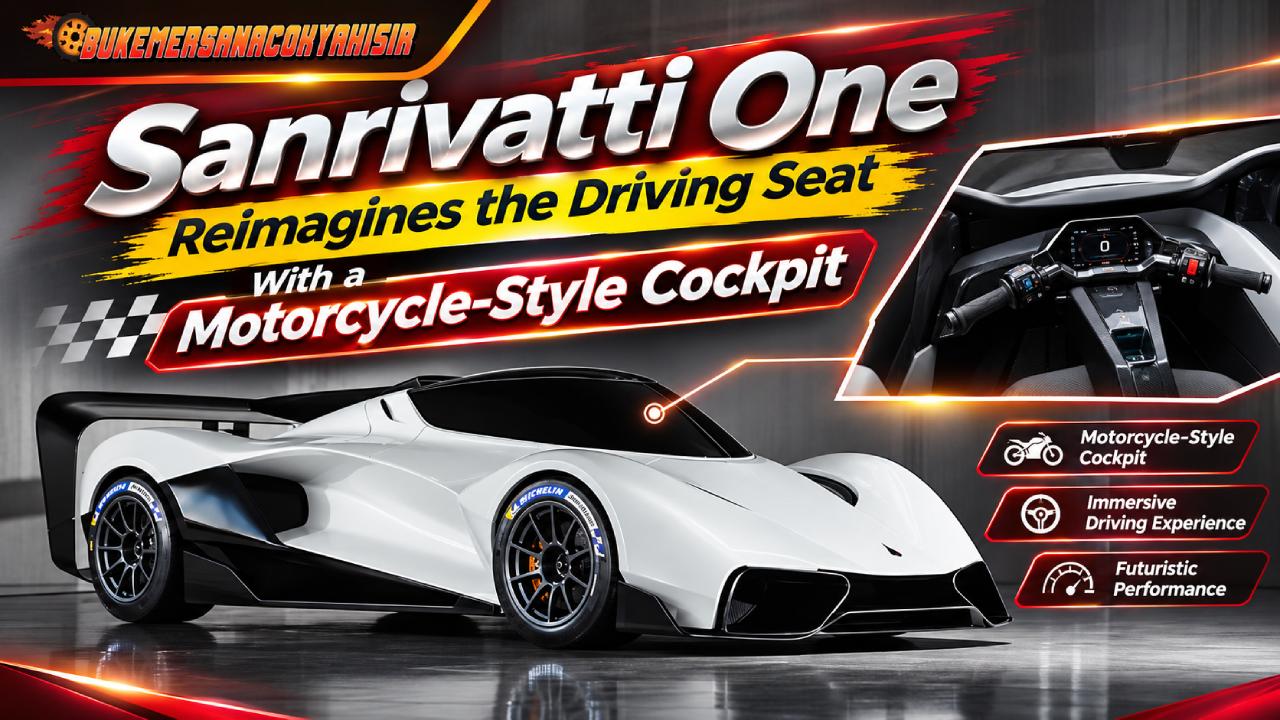
Bukemersanacokyakisir – Most track cars ask the driver to settle deep into a bucket seat. The Sanrivatti One asks them to lean forward instead. The Dutch-Uruguayan startup calls this layout the Apex Position. It places the driver head-first in a single-seat cockpit, with the steering wheel ahead and the pedals behind on either side. The concept also pairs a planned 800bhp V10 with a target weight of 1,100kg. However, the cockpit is the detail that sets it apart. A power figure tells you how hard a car might accelerate. A driving position changes how you see the next corner before you even move. For Sanrivatti, that makes posture the starting point for the whole project. The real question is whether the layout can feel as intuitive on a circuit as it looks unusual in a photograph.
The Apex Position Uses a Saddle and a Steering Wheel
The cockpit uses a saddle-like support in place of a conventional seat. The driver leans forward as a rider might on a sports bike, but steers with a wheel and works the pedals with their feet. That combination matters because posture and controls are two separate things. A motorcyclist shifts their weight as the bike leans. The Sanrivatti One still asks its driver to control a four-wheeled car through familiar inputs. Even so, the reach to the wheel and the angle of the legs change how those inputs may feel. For example, a brake pedal can be easy to reach while stationary yet feel awkward during repeated hard stops. Likewise, a steering wheel needs to stay within comfortable reach when the driver makes quick corrections. Those details will determine how quickly a driver can settle into the Apex Position.
An 800bhp Judd V10 Gives the One a Familiar Heart
Sanrivatti plans to use a naturally aspirated V10 from Judd Power, paired with a sequential racing gearbox and paddle shifters. The engine has a quoted output of 800bhp. If the finished car also meets its 1,100kg target, that works out to roughly 727bhp per tonne before adding a driver. However, the calculation compares two targets. It does not establish how quickly the car will accelerate or lap a circuit. Tyres, gearing, and the ability to put power down will all influence the result. Meanwhile, the familiar drivetrain gives the project an interesting contrast. Sanrivatti wants drivers to learn a new posture, but the wheel and shift paddles give them familiar tools to work with. That balance makes sense. A driver learning how to judge the front of the car from an unfamiliar angle already has plenty to get used to.
A Forward Canopy Changes the Shape of the Car
The cockpit layout affects the bodywork as much as the seating. Sanrivatti places the windscreen farther forward and more upright than you might expect on a track hypercar. The screen forms part of a canopy that pivots forward to open. As a result, the car’s profile looks different even before you know how the driver sits. Behind that unusual front section, the rest of the body follows a familiar circuit-car formula. Large air intakes and prominent wings give the One the proportions of a machine built for a track. Still, the canopy raises practical questions that a side profile cannot answer. How easily can the driver climb in? Can they see a tight corner’s apex without lifting their head awkwardly? Those answers will reveal whether the cockpit’s shape helps the driving experience or simply makes the car more distinctive.
Also Read : Four Oil Tankers Reportedly Burn as Hormuz Tensions Escalate
Slick Tyres and Pushrod Suspension Follow a Proven Track Formula
Sanrivatti’s specification includes slick tyres, carbon brakes, magnesium wheels, and pushrod suspension. These choices put the biggest departure from convention inside the cockpit. Outside it, the One uses hardware familiar from dedicated circuit cars. For example, a pushrod arrangement lets designers place springs and dampers farther inboard. Slick tyres also make sense for a car intended to run on a dry circuit. However, a list of components tells you little about how they will work together. What matters is whether the car gives the driver useful feedback as grip changes. With the Apex Position, there is an extra wrinkle: the driver will feel braking and cornering loads through a different part of the body. That makes the setup as much about communicating what the car is doing as it is about generating grip.
How the One Compares With the McLaren Solus GT
The McLaren Solus GT offers a useful point of comparison. Both cars take a single-seat, track-focused approach and use a naturally aspirated Judd V10 with a sequential gearbox. Yet their cockpit ideas differ. The Solus GT puts the driver in a conventional seated position, whereas the Sanrivatti One asks the driver to lean forward. McLaren also explored a head-first layout with its Ultimate Vision Gran Turismo, but that concept stayed in the virtual world. Together, these comparisons show where the One fits. Its engine and single-seat format have recognizable precedents. The harder idea to bring to a real circuit is the riding posture. A virtual car can present a striking view from the cockpit. A physical prototype must also show that its driver can see, steer, and brake comfortably from that position, lap after lap.
A Boxster-Based Prototype Is an Early Step
Sanrivatti has a full-scale model and a prototype built around a Porsche Boxster. The model shows how the unusual cockpit changes the car’s proportions. Meanwhile, the Boxster-based prototype gives the team a physical starting point for exploring the layout. Neither establishes that a finished Judd-powered One has reached 800bhp or hit the 1,100kg target. Sanrivatti has yet to announce a price. At this stage, the most revealing update would be footage that shows the driver using the cockpit over a representative stretch of track. A camera inside the canopy could show how much the driver moves their head or hands when the car changes direction. An exterior view might make the design look dramatic. However, the onboard perspective would give a better sense of how it works once the driver has to concentrate on the next corner.
What the Apex Position Needs to Prove on Track
The most interesting test for the One may come at the end of a long straight. As the driver brakes and looks toward the corner, the cockpit needs to support their body without making it harder to steer or see. Then, several laps later, the driver needs to make the same movements without extra effort. This is where an unusual posture could either earn its place or become a distraction. In my view, a useful test would compare the driver’s experience in the One with that of a conventional single-seater on the same circuit. Where can they see the apex? How naturally can they correct the steering? What feels different after a full session? Those answers would tell us more about the Apex Position than a headline power figure could.

Post Comment