Fossil Hunting in Kenya with a Skoda Enyaq: A Modern Journey Through Ancient Origins
Bukemersanacokyakisir – The Turkana Basin in northern Kenya stands as one of the most significant regions in the study of human evolution. Often referred to as the “Cradle of Humankind,” this vast and arid landscape has yielded countless fossil discoveries that continue to shape scientific understanding of humanity’s origins. In extreme conditions where temperatures can exceed 40°C, exploring this region is both physically demanding and intellectually rewarding.
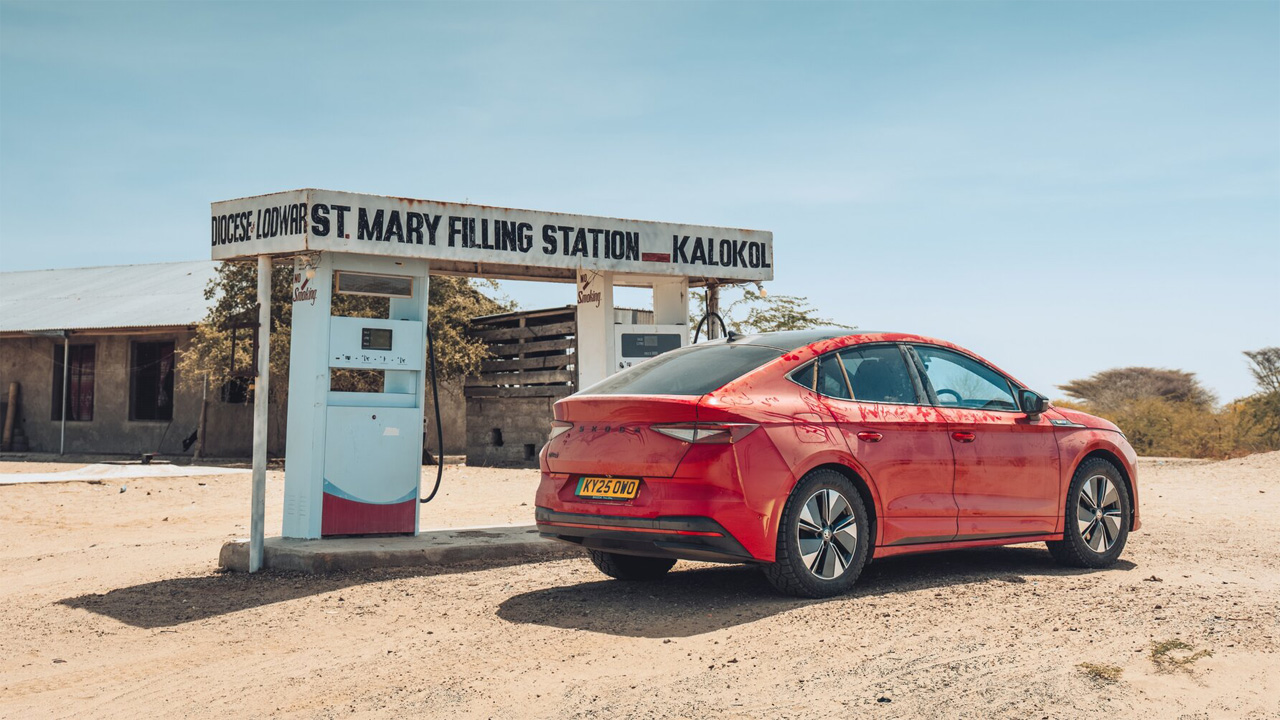
This expedition, however, brings an unusual twist. Instead of traditional off-road vehicles, the journey is undertaken using a Skoda Enyaq, a fully electric SUV. The contrast is striking—cutting-edge automotive technology navigating terrain that holds evidence of life millions of years old.
From the moment the journey begins, the environment commands attention. Dry earth stretches endlessly, volcanic rock formations dominate the terrain, and every step taken in this region feels like a step back in time. It is a place where history is not written in books, but embedded in the ground itself.
Skoda Enyaq Brings Modern Innovation to an Ancient Landscape
Choosing the Skoda Enyaq for such an expedition may seem unconventional, yet it proves to be a compelling decision. The name “Enyaq” itself symbolizes “source of life,” making it a fitting companion in a region deeply connected to human origins.
The model used for this journey is the Enyaq vRS, equipped with dual motors and all-wheel drive. While designed primarily for urban mobility, the vehicle demonstrates surprising adaptability in rugged environments. Minor modifications, including off-road tires and smaller wheels, enhance its capability across challenging terrain.
Also Read : Kylie Jenner Looks Casual at Coachella, Supporting Justin Bieber
Despite the harsh conditions, the Enyaq delivers a smooth and controlled driving experience. Its quiet electric drivetrain contrasts sharply with the rugged surroundings, offering a unique way to explore one of the most historically significant landscapes on Earth.
Extreme Terrain Tests the Limits of Electric Mobility
Driving through the Turkana Basin presents a series of challenges rarely encountered in conventional road conditions. Uneven surfaces, deep sand, and sharp rocks demand constant attention and adaptability. For an electric vehicle, these conditions also introduce additional considerations, particularly regarding energy consumption.
High temperatures significantly impact battery efficiency. Continuous use of air conditioning, essential in such extreme heat, reduces the vehicle’s range. In real-world conditions, the expected range drops considerably, highlighting the influence of environmental factors on electric mobility.
Nevertheless, the Enyaq remains composed. Its adaptive suspension system absorbs the impact of rough terrain, while its traction control ensures stability across varying surfaces. This performance demonstrates that electric vehicles can operate effectively beyond urban settings, even in some of the most demanding environments.
Fossil Hunting: A Test of Knowledge and Patience
The primary objective of the journey is fossil hunting, an activity that requires both expertise and patience. According to researchers at the Turkana Basin Institute, identifying fossils is far from straightforward. Many fossils resemble ordinary stones, making it difficult for untrained eyes to distinguish between them.
Fossils often retain the structure of bone but have transformed into stone over millions of years. Recognizing them requires a deep understanding of anatomy and geological processes. Even experienced researchers may spend entire seasons without making significant discoveries.
Natural processes such as erosion play a crucial role in exposing fossils. New finds may emerge after rainfall or shifts in the landscape, meaning that timing and persistence are key factors in successful fossil hunting.
Turkana Basin’s Role in Shaping Human History
The Turkana Basin has produced some of the most important fossil discoveries in human history. Among them is the famous “Turkana Boy,” a remarkably complete Homo erectus skeleton estimated to be around 1.5 million years old.
The region’s unique geology contributes to its significance. Layers of sediment and volcanic ash help preserve fossils and allow scientists to accurately date their findings. This combination of preservation and precision makes Turkana one of the most valuable research sites in the world.
Additionally, environmental changes in the region are believed to have influenced human evolution. Shifts in climate may have driven early humans to adapt, leading to developments such as bipedalism, tool use, and communication.
Encounters with Local Communities and Infrastructure Challenges
Beyond its scientific importance, the journey also offers insight into life in northern Kenya. Towns like Lodwar and nearby villages reflect a lifestyle shaped by the region’s harsh environment. Despite limited resources, communities maintain vibrant local cultures and traditions.
The presence of a modern electric vehicle draws curiosity. In an area dominated by conventional 4×4 vehicles, the Enyaq stands out as a symbol of technological progress. However, the lack of charging infrastructure presents a significant challenge.
Electricity supply in the region can be inconsistent, requiring careful planning to ensure the vehicle remains operational. This highlights the gap between technological advancement and infrastructure development in remote areas.
Traversing Diverse Landscapes from Desert to Lake Shores
The journey through Turkana Basin is not limited to fossil hunting. It also involves exploring a variety of landscapes, each offering its own unique characteristics. From vast desert plains to the shores of Lake Turkana, the scenery is both harsh and breathtaking.
Driving across sand dunes and rocky terrain showcases the Enyaq’s versatility. Despite its weight, the vehicle maintains traction and stability, even in challenging conditions. This capability underscores the potential of electric vehicles in diverse environments.
The landscapes also provide a glimpse into the conditions faced by early humans. Harsh climates and limited resources likely played a crucial role in shaping human evolution, making the environment itself an important part of the story.
A Modest Discovery with Meaningful Impact
During the expedition, a fossil is discovered, though not of human origin. The find turns out to be a fragment of bone from a large prehistoric animal, likely a hippopotamus.
While not a groundbreaking discovery, the experience remains significant. It highlights the unpredictability of fossil hunting and the importance of every find in contributing to scientific knowledge.
Even small discoveries can provide valuable insights into ancient ecosystems and the interactions between species. They serve as reminders that understanding the past is a gradual process built on countless individual findings.
Conclusion: Bridging Past and Future Through Exploration
This journey through the Turkana Basin illustrates a unique intersection between past and future. A modern electric vehicle navigates terrain that holds the earliest traces of human existence, creating a narrative that spans millions of years.
The experience demonstrates not only the capabilities of electric mobility but also the enduring importance of exploration and discovery. As technology continues to evolve, it opens new possibilities for studying and understanding the world.
Ultimately, the expedition serves as a reminder that progress is a continuous journey. Just as human evolution has shaped who we are today, technological innovation will continue to shape the way we explore and interact with our planet.