Sony-Honda EV Project Cancelled: Afeela 1 Axed Just Before Market Launch
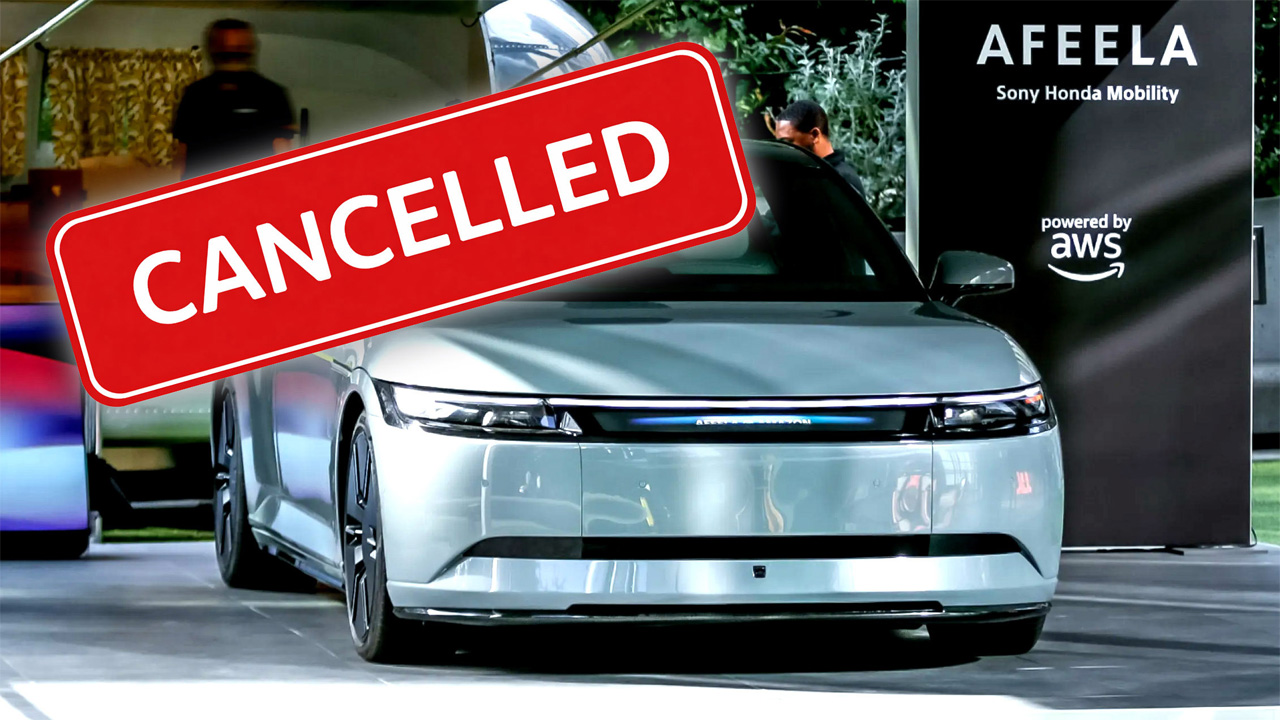
Bukemersanacokyakisir – The abrupt cancellation of the Sony Honda Mobility (SHM) electric vehicle project marks one of the most surprising developments in the automotive industry in recent years. Just as the Afeela 1 was gaining traction and approaching its anticipated launch phase, both companies decided to pull the plug entirely. This decision not only halts production but also reshapes expectations surrounding one of the most ambitious collaborations between a technology giant and an automotive powerhouse.
Initially announced in September 2022, the joint venture between Sony and Honda generated significant buzz. The partnership promised a new era of software-defined mobility, blending Sony’s expertise in entertainment, sensors, and AI with Honda’s decades-long automotive engineering capabilities. Naturally, expectations were sky-high. Industry analysts believed Afeela could rival premium EV brands by delivering a unique in-car digital experience.
Timeline of Sony Honda Mobility Venture
From its inception, Sony Honda Mobility moved quickly to establish itself as a serious contender in the EV space. Within a short span, the company unveiled prototypes, showcased advanced features at major tech events, and even opened pre-orders in early 2025. California was chosen as the initial launch market, signaling a clear intention to compete in one of the world’s most competitive EV ecosystems.
However, beneath this rapid progress, underlying challenges were beginning to surface. While public announcements remained optimistic, internal shifts within Honda’s broader electrification strategy were quietly reshaping priorities. These changes would ultimately prove decisive in determining the fate of the Afeela project.
Expectations Surrounding Afeela 1
The Afeela 1 was not just another electric sedan—it was marketed as a futuristic mobility platform. Equipped with advanced driver-assistance systems, immersive infotainment powered by Sony, and a sleek design language, the vehicle was positioned as a premium offering. Many expected it to compete directly with Tesla’s Model S and other high-end EVs.
Also Read : Global Markets Volatile Investors Turn to Safe Assets Amid Global Tensions
Moreover, the concept of integrating entertainment ecosystems—possibly even gaming experiences—into the driving environment added another layer of intrigue. The idea of a “PlayStation on wheels” captured public imagination. Yet, despite these promising features, the project ultimately failed to reach production, highlighting how even the most innovative ideas can falter without a stable strategic foundation.
Honda’s Strategic Shift in Electrification
A critical factor behind the cancellation lies in Honda’s recent reassessment of its electrification strategy. Just weeks before the Afeela discontinuation announcement, Honda revealed that it would be scrapping its 0 Series electric vehicles, signaling a major shift in direction. This move alone raised eyebrows, but the broader implications became clearer as more projects began to unravel.
The company openly acknowledged that it expects losses of up to 2.5 trillion yen over the coming financial years. Such a staggering projection underscores the immense financial pressure facing traditional automakers as they transition toward electric mobility. In this context, cutting high-risk or non-core projects becomes a logical—if painful—decision.
Financial Pressures and Projected Losses
The EV market, while growing rapidly, is also notoriously capital-intensive. Developing new platforms, battery technologies, and software ecosystems requires billions in investment, often with uncertain returns. For Honda, these financial realities appear to have forced a recalibration of priorities.
Rather than spreading resources across multiple ambitious projects, the company seems to be consolidating efforts into areas with clearer profitability pathways. Unfortunately, this meant that collaborative ventures like Sony Honda Mobility were no longer sustainable under the revised strategy.
Impact on EV Development Pipeline
The cancellation of both the 0 Series and the Afeela 1 suggests a broader contraction in Honda’s EV ambitions—at least in the short term. This doesn’t mean Honda is exiting the EV market altogether, but it does indicate a more cautious and focused approach moving forward.
For Sony, the impact is equally significant. Without Honda’s automotive infrastructure and engineering support, continuing the project independently becomes far more challenging. As a result, the joint venture found itself without a viable path forward.
Why the Afeela 1 Project Was Discontinued
The official statement from Sony Honda Mobility provides a clear, albeit sobering, explanation. The crux of the issue lies in the inability to access certain technologies and assets that were initially promised by Honda. These components were essential to the original business plan, and without them, the project’s feasibility collapsed.
Loss of Critical Technology Support
Honda’s withdrawal of key technological contributions effectively dismantled the foundation upon which Afeela was built. From vehicle platforms to manufacturing capabilities, these elements are not easily replaceable—especially within tight development timelines.
This highlights a fundamental risk in joint ventures: dependency. When one partner alters its strategic direction, the entire collaboration can be jeopardized. In this case, Sony Honda Mobility simply could not compensate for the sudden gap in resources.
Breakdown of Initial Business Planning
Beyond the technical challenges, the situation also reflects a breakdown in long-term planning. The initial business model assumed stable contributions from both parties. Once that assumption no longer held true, the economic viability of the project came into question.
Ultimately, the decision to cancel the Afeela 1 was not just about immediate obstacles, but about the lack of a sustainable path forward. Continuing development under such uncertainty would likely have resulted in even greater financial losses.
What Happens to Pre-Orders and Customers
One of the immediate concerns following the announcement was the fate of customers who had already placed pre-orders. Fortunately, Sony Honda Mobility has confirmed that all early adopters will receive full refunds, ensuring that buyers are not financially impacted by the cancellation.
Refunds for Early Buyers
Pre-orders for the Afeela 1 opened in January 2025, targeting customers in California. These early adopters were among the first to believe in the project’s vision. By offering full refunds, SHM aims to maintain a level of trust and goodwill, even as the project comes to an end.
Market Reaction and Consumer Trust
Despite the refunds, the cancellation may still affect consumer confidence. Buyers may become more cautious about committing to new or experimental automotive brands, particularly those formed through partnerships. Trust, once shaken, can take years to rebuild.
The Cancelled SUV and Future Lineup
The Afeela 1 was only the beginning. Plans were already in motion for a follow-up SUV, which has now also been scrapped. This indicates that the cancellation is not an isolated decision, but part of a broader strategic retreat.
Expansion Plans That Never Materialized
The SUV was expected to expand the Afeela lineup and tap into the growing demand for electric crossovers. Its cancellation underscores how quickly ambitious roadmaps can change in response to shifting market conditions.
Implications for Product Strategy
Without a flagship model or future lineup, Sony Honda Mobility’s immediate role in the EV market becomes uncertain. The company now faces the challenge of redefining its purpose or pivoting to new opportunities.