Peugeot E-208 Review: A Stylish Electric Supermini With Tougher Rivals
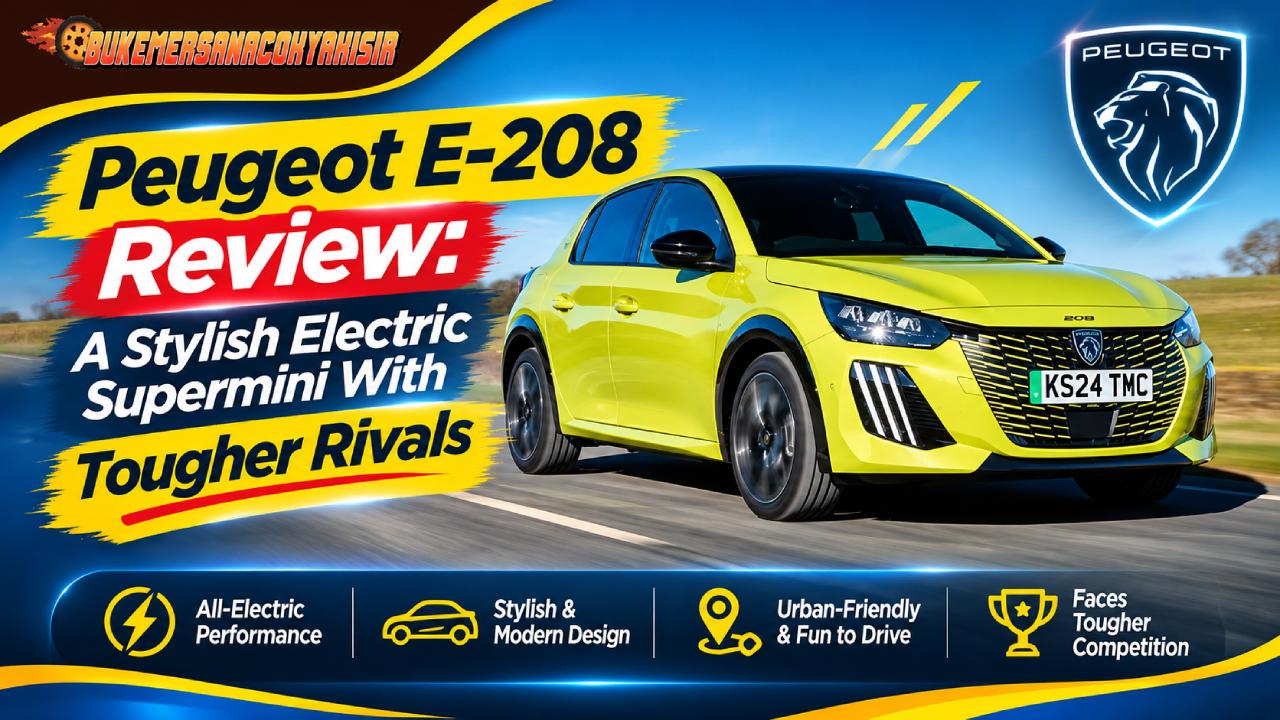
Bukemersanacokyakisir – Walk past a Peugeot E-208 and you might mistake it for a petrol 208. That resemblance is deliberate. Peugeot uses the same compact body and sharp styling for both versions, so choosing electric power does not mean choosing a different shape. The 2023 facelift updated the headlights, front trim, wheels, and rear lights without changing the car’s basic proportions. Meanwhile, Peugeot fits the battery into spaces beneath the seats and into areas that would otherwise house parts of the petrol drivetrain. That packaging helps explain why the E-208 feels like another version of the familiar supermini. For buyers, it also changes the order of the decision. You can judge whether the 208 fits your parking space, passengers, and daily routes before deciding which powertrain suits you. The electric version still needs to justify its price, but its design makes a strong first impression.
The Cabin Looks Smart, but Try the Driving Position First
The E-208 has a digital instrument panel and USB sockets, while equipment such as wireless phone charging can vary by trim. The cabin’s most distinctive feature, however, is the relationship between the small steering wheel and the raised instruments. Some drivers will find the layout easy to read. Others may need to adjust the seat and wheel before they can see the whole display. Therefore, spend a few minutes on the driving position before focusing on the equipment list. Set the seat where you would normally drive, then check the display without moving your head. After that, try the rear seats with the front seats still in place. A cabin can look polished in photographs and still feel tight with passengers aboard. For a buyer who regularly carries adults in the back, that simple check may matter more than any extra screen or charging socket.
Two Battery Options Offer 226 or 268 Miles of WLTP Range
Peugeot offers two regular E-208 powertrains. The first combines a 136 bhp motor with 45 kWh of usable battery capacity and a WLTP range of 226 miles. The second pairs a 156 bhp motor with 48 kWh of usable capacity and extends the WLTP figure to 268 miles. However, listings may describe the same batteries as 50 kWh and 51 kWh because those figures refer to gross capacity. Usable capacity is the portion available for driving, so use the same measure when comparing cars. The larger battery version offers 42 more miles on the official cycle, but your route determines how useful that difference will be. For example, the extra range may give you more flexibility on a weekend trip. For short commutes with regular home charging, the smaller battery could already cover your needs.
Real-World Range Depends on How and Where You Drive
In one brisk drive on a warm day, the larger battery E-208 returned 4.1 miles per kWh. Multiply that by its 48 kWh of usable capacity and you get about 197 miles, or roughly 200 miles. That estimate comes from the observed efficiency, rather than a test that ran the battery from full to empty. It also falls short of the 268-mile WLTP figure, which comes from a standardised test cycle. Use the official number to compare cars, then allow for your own speed, weather, and use of cabin heating. Some higher trims include a heat pump, which can reduce how much energy the car uses to warm the cabin. Still, it cannot tell you exactly how far a particular journey will take you. If you regularly drive on motorways in winter, assess the car against that routine before paying more for extra range.
Also Read : Four Oil Tankers Reportedly Burn as Hormuz Tensions Escalate
A 100 kW Charging Peak Puts a Top-Up at Around 30 Minutes
The E-208 supports up to 100 kW of DC charging. Under suitable conditions, a charge from 10 to 80 per cent takes around 30 minutes. However, 100 kW is a peak figure, and the car will not hold that rate throughout the session. Battery temperature and the charger’s available power can also affect the time you spend plugged in. This matters most if you often cover enough distance to need a public stop. For example, a charger near somewhere you already plan to eat makes a half-hour pause easier to fit into a trip. Conversely, if you need public charging several times a week, the detour and potential wait become part of the ownership experience. Before choosing either battery, map a typical long journey and see where you would stop, how far you could go afterwards, and whether the route offers an alternative charger.
Extra Weight Makes the E-208 Feel More Settled
The battery changes how the 208 feels on the road. The electric version weighs around 1,558 kg with a driver, roughly 200 kg more than a comparable petrol automatic. As a result, it can feel more settled, but it gives up some of the petrol model’s agility when changing direction. That trade-off matters differently depending on where you drive. If most journeys involve town traffic and short stretches of faster road, you may notice the E-208’s composed feel more often than the extra weight. On a winding road, however, the difference can become easier to pick out. A useful test drive should cover both situations. Try a familiar stretch with several turns, then spend time on the roads you use most days. That will tell you whether you prefer the electric model’s character or simply like the idea of an electric 208.
The E-208 GTI Trades Some Range for More Performance
Peugeot also offers an E-208 GTI with a 277 bhp motor and 51 kWh of usable battery capacity. It reaches 62 mph in 5.5 seconds, with a limited top speed of 112 mph. Its quoted range is up to 233 miles, which is 35 miles less than the regular 156 bhp E-208’s WLTP figure. The GTI therefore serves a different buyer, even though the cars share a name and basic shape. If acceleration and the appeal of a small performance car are what drew you in, the GTI gives you a reason to look beyond the regular models. However, if you want fewer stops on longer journeys, the 156 bhp version has the stronger range figure. The clearest way to compare them is to decide whether you would notice the added performance more often than you would use the extra range.
UK Rivals Give Buyers Reasons to Look Beyond the Peugeot
With a UK starting price of around £24,000 in the comparison, the E-208 sits among several credible alternatives. The closely related Vauxhall Corsa Electric is an obvious starting point if you like the Peugeot’s size but want a different cabin. Meanwhile, the Renault 5 E-Tech and Mini Cooper Electric are worth driving if steering feel and character matter to you. If your priority is range, compare the equivalent versions of the Volkswagen ID. Polo, Cupra Raval, and Škoda Epiq. Finally, check the price of the specific trim you want rather than comparing headline figures alone. A lower advertised price may come with a different battery or equipment list. For the Peugeot, the strongest case is a buyer who likes the 208’s design and driving position, can live with its cabin space, and finds that either battery fits their regular journeys.


Post Comment