Genesis GV60 Magma Review: A 641bhp Luxury EV With a Firm Edge
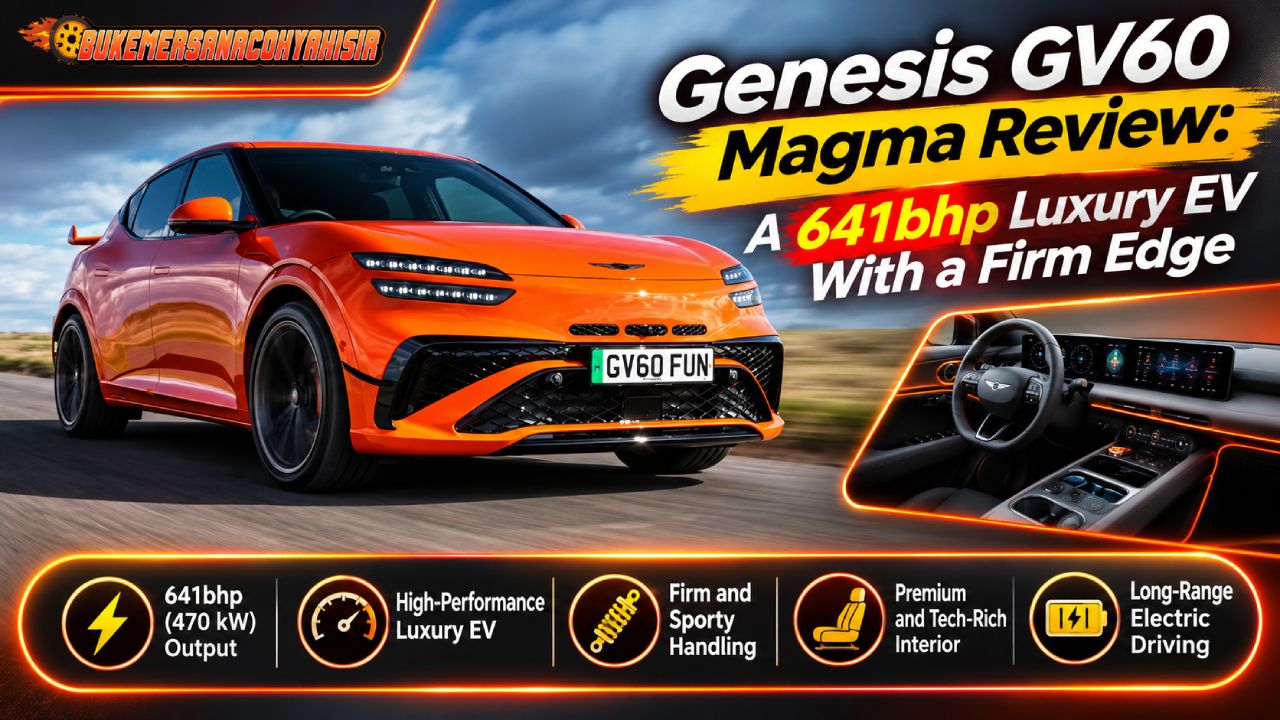
Bukemersanacokyakisir – The Genesis GV60 Magma is a 641bhp electric SUV with a sharp chassis, simulated gearshifts and a synthetic V6 soundtrack. Those choices give the first road-going Magma model a personality of its own. They also raise a question for a brand associated with comfort. How much ride quality should a luxury EV trade for a more involving drive? The difference becomes clear on two familiar stretches of road. On a series of bends, the Magma’s quick responses and strong grip make it easy to place. Around town, broken surfaces reveal how firmly Genesis has set up the suspension. That trade-off matters more to the buying decision than the acceleration figure alone.
Shared Hyundai hardware gets its own Genesis tuning
The Magma draws on technology from the Hyundai Ioniq 5 N, including its approach to simulated shifting. Genesis gives the virtual gearbox its own ratios and revises the GV60’s suspension geometry. Compared with the standard GV60, the Magma sits 20mm lower and has a 10mm wider track. It rides on 21-inch wheels fitted with Pirelli P Zero 5 tyres. Together, those changes shape how the SUV responds when the driver turns in and how it settles after changing direction. For a car weighing approximately 2,240kg, those responses are important. The Magma’s grip inspires confidence on a twisting road, although the weight still makes itself felt when the driver asks for a quick change of direction.
A 15-second Boost mode unlocks 641bhp
The Magma uses an 800-volt electrical architecture and two motors to drive all four wheels. With Boost engaged, the motors deliver a combined 641bhp and 583lb ft of torque for up to 15 seconds. Genesis claims 0–62mph in 3.4 seconds, 0–124mph in 10.9 seconds and a top speed of 164mph. The short boost window gives those headline figures some context. On a winding road, the more useful performance comes from how promptly the car responds to smaller throttle inputs. Meanwhile, the selectable drive modes let the driver change how the steering, suspension and differential behave. Sprint mode takes those settings in their most aggressive direction.
Virtual gearshifts make acceleration easier to read
Paddles behind the steering wheel control a system that simulates an eight-speed dual-clutch gearbox. With it active, acceleration builds through a virtual gear and meets a simulated rev limiter until the driver shifts up. Downshifts introduce regenerative braking that feels like mild engine braking. Alongside the shifts, the synthetic V6 soundtrack rises in pitch towards a virtual 9,000rpm. The useful part is the connection between those cues and what the car is doing. The changing pitch helps the driver judge throttle input, while the gear indicator makes it easy to keep track of the selected ratio. However, the touchscreen setting for switching the feature on or off is buried several menus deep.
Strong grip and big brakes suit a fast road
The Magma’s grip stands out most through a sequence of bends, where its tyres and chassis work together to keep the car composed. Quick responses make it easier to judge how the SUV will react to steering inputs, even when the road is damp. Speed is also backed up by substantial brakes, with 400mm front discs and 360mm rear discs. Genesis claims a stopping distance of 33.8 metres from 62mph. The pedal feel is softer than the rest of the setup might lead you to expect. There is plenty of stopping power, but the initial response through the pedal gives the driver less immediate feedback than the steering does.
Also Read : China’s Wingless Flying Car Promises a 300 Kilometer Range
A firm low-speed ride tests the luxury brief
Inside, the Magma adds bucket seats, faux-suede trim, aluminium pedals and displays for battery temperature and cornering forces. Physical switches help with some everyday tasks, although the touchscreen still handles several important settings. Ride quality is the bigger issue. At low speeds, rough surfaces can send repeated jolts through the cabin, especially to passengers in the back. Even Comfort mode leaves the suspension feeling firm on uneven urban roads. That matters because a family SUV spends plenty of time on the school run, in traffic or crossing patched-up streets. On a smooth, open road the chassis feels alert. In town, rear passengers experience the same setup from a very different seat.
Fast charging helps offset the modest range
The Magma has an 84kWh gross battery and a claimed 264-mile WLTP range. Under suitable conditions, it can accept up to 264kW on a DC charger, with a claimed 10–80 per cent charge in 18 minutes. For a longer journey, that makes the charging stop an important part of the equation. A compatible rapid charger can help keep the stop brief, but range between stops will depend on temperature and driving style. Around 200 miles is a rough estimate in mild weather with enthusiastic driving. Colder conditions can bring that figure down. Drivers who regularly cover motorway distances will have more reason to weigh up both figures than those who mostly charge at home.
The £75,100 UK price makes the ride harder to overlook
At £75,100 in the UK, the GV60 Magma costs about £10,000 more than the Hyundai Ioniq 5 N and £15,000 more than the Kia EV6 GT in the comparison at launch. That premium puts the focus on the Genesis-specific tuning, cabin and design. The Magma makes its strongest case for buyers who will use the paddle shifts and enjoy the way it responds on a good road. Its appeal is harder to justify for someone who mainly wants a quiet, comfortable electric SUV for everyday trips. A useful test drive would include both a flowing road and a damaged stretch of tarmac, with time in the back seat if the car will regularly carry passengers.



Post Comment