iCar V23 Specifications, Technology, Advantages and Disadvantages of This Car
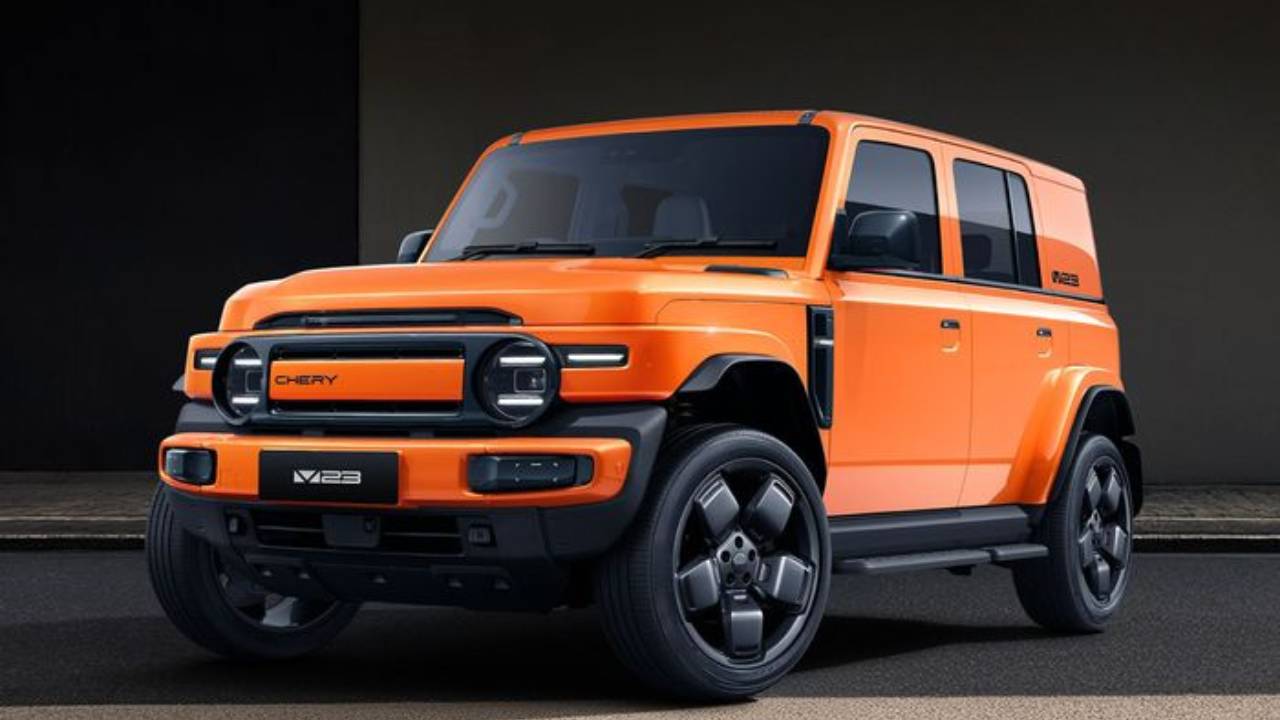
Bukemersanacokyakisir – iCar V23 has become one of the most talked-about electric SUVs lately, and honestly, I understand why. The first time you see it, the boxy design instantly gives off that “ready for anything” vibe. However, looks alone don’t sell a car anymore, especially in the EV era. People want real numbers, real technology, and real proof that the vehicle can handle daily life. That’s why this breakdown matters. In this article, I’ll walk you through iCar V23 specifications, its technology, and the real advantages and disadvantages, with a clear, human perspective. Because at the end of the day, you’re not buying a brochure. You’re buying a lifestyle on four wheels.
“Read also: Spotify Rolls Out 3 New Lyrics Features That Change How You Listen“
iCar V23 Design and Dimensions: Boxy, Bold, and Surprisingly Practical
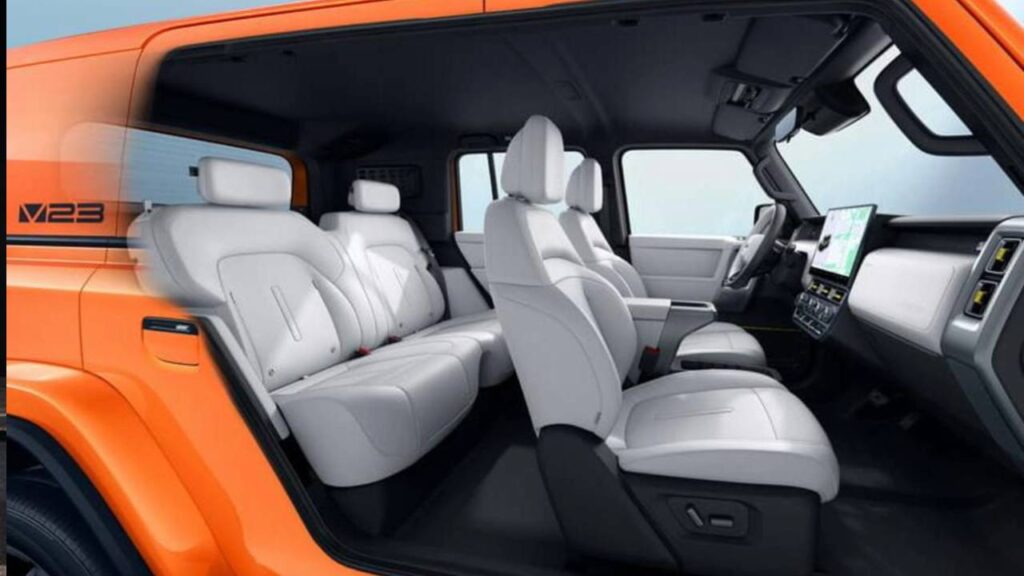
iCar V23 is built like a modern electric “mini overlander,” and its dimensions back up that impression. The SUV measures 4,220 mm in length, 1,915 mm in width, and 1,845 mm in height, with a wheelbase of 2,735 mm. So, it sits firmly in the medium SUV category. Interestingly, it is shorter than an older Honda CR-V, yet wider and taller, which explains why it looks so confident on the road. Meanwhile, compared to something like a Suzuki Jimny 5-door, the iCar V23 feels like the “grown-up” version bigger, broader, and more urban-ready. In my opinion, this size is a sweet spot: it’s large enough to feel premium, but not so huge that it becomes stressful in city driving.
iCar V23 Powertrain Options: RWD for Daily Use, iWD for Real Confidence
When it comes to performance, iCar V23 offers two drivetrain options, and that’s already a smart move. The RWD version uses a single electric motor producing around 100 kW, which equals roughly 136 PS. For city commuters, that’s actually more than enough, especially because electric torque feels immediate. Meanwhile, the iWD (AWD) variant uses dual motors with a combined output of 155 kW, or around 211 PS. In real-world terms, this means the iWD feels more secure on slippery surfaces, steep inclines, and uneven terrain. Personally, I see the iWD as the “complete” version, especially for drivers who want that extra peace of mind. Still, the RWD version could be the more affordable and realistic choice for everyday urban users.
Battery Choices and Range: LFP vs NMC and What It Means for Buyers
Battery selection is where iCar V23 becomes interesting, because it doesn’t force everyone into one setup. There are three battery options: an LFP 47.28 kWh pack with a claimed range of 301 km (CLTC), an LFP 59.93 kWh pack rated for 401 km (CLTC), and a top-tier NMC 81.76 kWh pack that claims up to 501 km (CLTC). Now, here’s the honest part: CLTC is usually optimistic. However, it still helps you compare variants. In my view, the 59.93 kWh version feels like the most balanced option. It should provide decent daily range without the cost jump of the NMC pack. Meanwhile, the 81.76 kWh version is for people who want maximum flexibility, especially for longer trips.
Charging and Efficiency: The EV Reality Most Buyers Forget
One thing many buyers underestimate is charging behavior, not range. Even if iCar V23 claims 401 km, the real question is: how fast can you charge, and how often will you need to? While the article’s source focuses more on testing, it’s still safe to say that EV ownership depends heavily on charging infrastructure and habits. In Indonesia, public charging is growing, but it is still uneven across regions. Therefore, iCar V23 will likely feel most comfortable for drivers living in cities with better charging networks. In my opinion, this is where buyers must be honest with themselves. If your daily routine is predictable, an EV like iCar V23 can feel effortless. However, if you drive unpredictably across long distances, you may still feel range anxiety without proper planning.
Technology and Driver Assistance: Radar That Actually Matters
iCar V23 doesn’t just look futuristic it also brings practical technology. During tight maneuver testing, the radar system displayed the vehicle’s surroundings on the center screen with distance information in centimeters. That may sound like a gimmick, but in reality, it’s extremely useful. If you’ve ever squeezed into a narrow parking space or passed through a tight alley, you know how stressful it can be. Therefore, this feature directly supports daily driving. Additionally, the system helps the driver feel more confident, which is something many SUVs lack when they get wider. In my opinion, technology should always reduce stress, not add complexity. So far, iCar V23 seems to understand that.
Off-Road Geometry and Ground Clearance: Numbers That Tell a Real Story
This is where iCar V23 starts separating itself from typical city EVs. The SUV offers an approach angle of 43 degrees, a departure angle of 41 degrees, and a ground clearance of 210 mm. Those are strong numbers, especially for an electric SUV. While most owners may never use these specs fully, they matter more than people realize. For example, ground clearance affects speed bumps, potholes, flood puddles, and rough roads. Meanwhile, approach and departure angles protect the bumpers during steep ramps or uneven surfaces. In short, iCar V23 has real “SUV DNA,” not just a tall body. That’s a big advantage, especially in markets like Indonesia where road conditions can change quickly.
Suspension Comfort: Soft Enough for Families, Stable Enough for Testing
One of the most surprising aspects of iCar V23 is how its suspension behaves. Even when driving over articulation obstacles and uneven surfaces, the ride felt soft and controlled. Yes, the body moves, but it doesn’t feel chaotic. Instead, it feels like the suspension is designed for comfort first, while still maintaining stability. That’s important because many boxy SUVs can feel too stiff, almost like they are trying too hard to be “off-road.” iCar V23 feels more balanced. In my opinion, this is a major advantage. Because most buyers want a tough-looking SUV, but they still need comfort for daily commutes, family rides, and long weekend drives.
“Read also: A Pilot’s Experience Flying the Supersonic Concorde Jet“
Stability Testing: Side Slope and Steep Inclines Prove Its Engineering
During the test session, iCar V23 was pushed into situations that many SUVs never face in public demonstrations. It handled a side slope of up to 40 degrees and climbed a steep 38-degree incline with ease. Inside the cabin, the tilt feels intense, but the SUV remains composed. That sense of stability likely comes from its EV architecture, especially the low battery placement. As a result, the center of gravity stays lower than traditional SUVs. In my view, this is one of the strongest “hidden benefits” of EV SUVs. They can look tall, but still feel planted. Therefore, iCar V23 delivers confidence in a way that feels modern and technically convincing.
Advantages of iCar V23: What Makes This SUV Stand Out
The biggest advantage of iCar V23 is its combination of style and substance. It offers a bold boxy design, practical dimensions, and genuine SUV geometry. Additionally, it provides multiple drivetrain and battery choices, which helps buyers match the car to their lifestyle. Furthermore, the driver assistance technology feels genuinely useful rather than decorative. Comfort is another key strength, since the suspension remains soft and controlled. Most importantly, iCar V23 seems built with real-world road conditions in mind. In my opinion, this SUV has the potential to become a favorite among buyers who want an EV that feels adventurous, yet still works perfectly for city life.
Disadvantages of iCar V23: The Trade-Offs You Should Know
However, no vehicle is perfect, and iCar V23 has its drawbacks. First, its wide body may still feel challenging in narrow streets, even with radar assistance. Second, the 21-inch wheels look premium, but they can become expensive to maintain, especially when it comes to tire replacement. Third, range claims based on CLTC testing may feel optimistic in real Indonesian driving conditions, especially with heavy AC use and traffic. Additionally, EV ownership still depends heavily on charging access, which remains inconsistent in some regions. Finally, since iCar is still building its brand presence, buyers may have questions about long-term service networks and resale value. In my view, these are realistic concerns, and they should be part of the decision-making process.
Is iCar V23 Worth Considering in 2026?
iCar V23 feels like one of the more serious electric SUVs entering the market, not just because of its design, but because its specs and performance back up the promise. It offers solid dimensions, strong SUV geometry, practical technology, and a balanced ride quality. At the same time, buyers should be realistic about EV ownership, charging availability, and the potential cost of large wheels. Still, if you want an electric SUV that looks tough, feels stable, and offers real usability beyond city roads, iCar V23 is absolutely worth watching. Personally, I see it as a new kind of EV: one that doesn’t try to look like a spaceship, but instead looks like a reliable companion for everyday adventures.