JAS Tensei Reimagines the Honda NSX with a Screaming V6
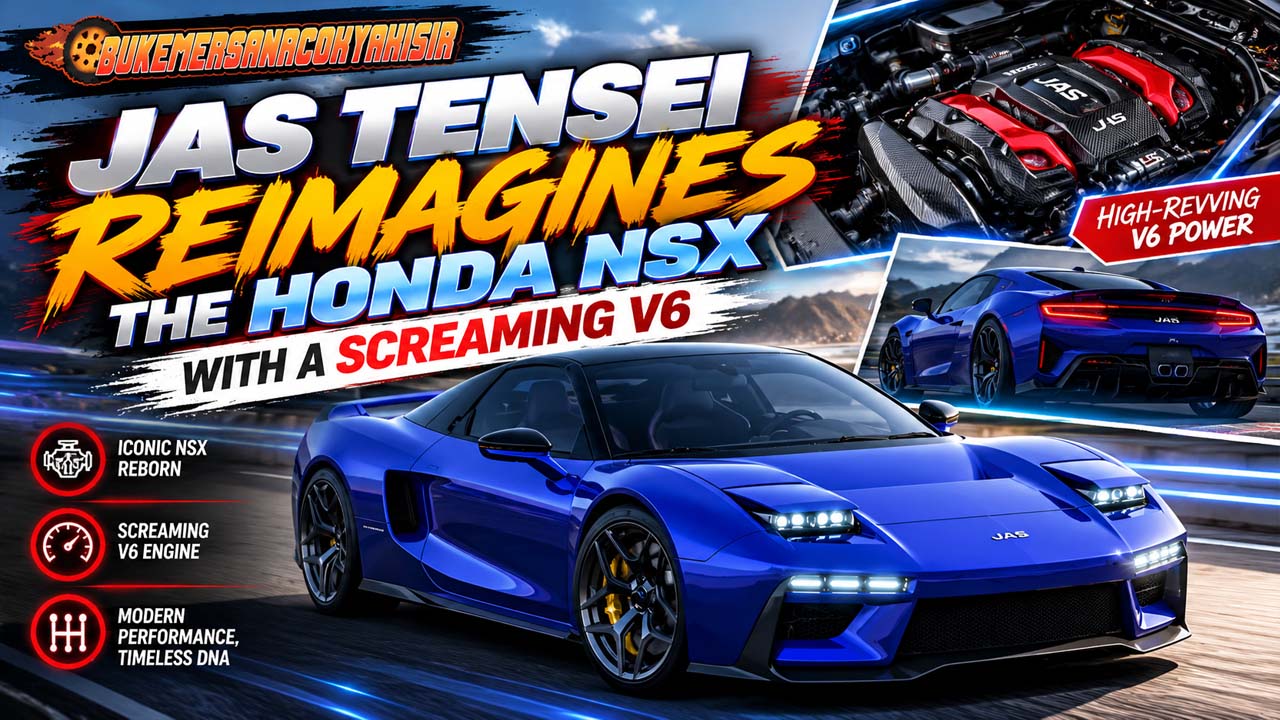
Bukemersanacokyakisir – The JAS Tensei Honda NSX brings a familiar silhouette into a different era. Developed by JAS with Pininfarina, this project reworks the first-generation NSX rather than introducing a new Honda production model. Its appeal rests on a carefully chosen combination: a naturally aspirated V6, rear-wheel drive and recognisable design details. However, the engineering changes extend well beyond a cosmetic refresh. With a reported 414bhp and extensive chassis revisions, the Tensei aims to preserve the original car’s personality while giving it substantially greater performance.
Pininfarina Gives the Project a Historical Connection
Pininfarina’s involvement adds an interesting link to the NSX story. The Italian design house created the HP-X concept that preceded Honda’s original supercar. Now, its partnership with JAS revisits that heritage through a new interpretation of the production car. This connection gives the project more depth than a simple styling exercise. Nevertheless, the Tensei does not merely reproduce the earlier shape. Its broader proportions and revised surfaces establish a distinct identity. In my view, that balance matters: a successful reinterpretation should acknowledge its origins while offering a reason to exist.
JUDD Rebuilds the V6 Around a Larger Capacity
At the centre of the project sits a thoroughly redeveloped version of Honda’s original 3.0-litre V6. JUDD Power retains the block and cylinder-bank angle, but increases displacement to 3.4 litres. The changes include a new short-stroke steel crankshaft, lightweight alloy cylinder heads and titanium valves. Meanwhile, individual throttle bodies replace a more conventional intake arrangement. The engine remains naturally aspirated and reaches 8,500rpm. Consequently, the Tensei’s character promises to come from engine speed and response rather than turbocharged torque. Actual impressions, however, will require time behind the wheel.
Fixed Valve Timing Replaces the Original VTEC System
One of the more striking decisions concerns the valvetrain. The redevelopment removes VTEC and introduces a fixed-timing racing arrangement with aggressive camshafts. That represents a significant departure from a feature closely associated with Honda’s performance identity. Alongside it, a carbon-fibre intake plenum and Inconel exhaust shape the engine’s breathing and sound. The supplied description evokes the noise of 1990s Grand Prix engines, although that remains an evocative claim rather than a measured comparison. For enthusiasts, the interesting question is how these changes influence response across the usable rev range.
Also Read : FBI Stops Alleged ISIS-Inspired Mall of America Attack Plot Targeting Dozens
A Lower Engine Position Complements the Chassis Work
The V6 sits 45mm lower and uses a dry-sump lubrication system. A six-speed gearbox and limited-slip differential deliver its output to the rear wheels. Meanwhile, JAS reinforces key sections of the original aluminium structure, including the pillars and central tunnel. Revised suspension geometry and four-way adjustable KW dampers support the mechanical changes. Together, these updates show that the project addresses the whole vehicle. More power alone would tell an incomplete story. The real test will be whether the chassis translates that performance into confidence, precision and a coherent driving experience.
Carbon-Fibre Bodywork Keeps the Shape Familiar but Stronger
Pininfarina replaces the exterior panels with carbon fibre, contributing to a stated dry weight of 1,250kg. The car becomes wider and longer, yet retains the original NSX’s distinctive pop-up headlights. Their bespoke opening mechanism brings modern engineering to a deliberately nostalgic feature. Elsewhere, airflow management takes priority over conspicuous aerodynamic additions, with passages around the nose, wheels and engine intakes. The rear lights also receive a three-dimensional interpretation. Visually, the result appears more muscular than the original. Whether that improves the design remains a matter of personal taste.
The Cabin Blends Premium Materials with Modern Displays
Inside, the Tensei replaces the original car’s period materials with leather, Alcantara and carbon fibre. A single-piece carbon-fibre dashboard forms the centrepiece, while Sabelt seats continue the lightweight theme. OLED displays introduce modern information technology into the redesigned cabin. Meanwhile, electric power steering is described as tuned for an analogue feel, and Brembo carbon-ceramic brakes provide the stopping hardware. These details suggest a mixture of traditional driving priorities and contemporary components. However, premium materials cannot establish comfort or usability on their own. Those qualities depend on execution as much as specification.
Only 35 Cars Will Carry the Tensei Name
JAS plans to build just 35 examples, with prices starting at £770,000 before the donor car and VAT. That makes the JAS Tensei Honda NSX a highly exclusive commission rather than an accessible revival. Its reported 414bhp and 1,250kg dry weight imply roughly 331bhp per tonne on a dry-weight basis. Still, the numbers explain only part of its appeal. Buyers are also paying for the design, engineering and limited production. My view is that its strongest attraction lies in the combination of familiar NSX character and a distinctly reworked mechanical experience.


Post Comment