New Citroen 2CV Brings Big Personality to Small Electric Motoring
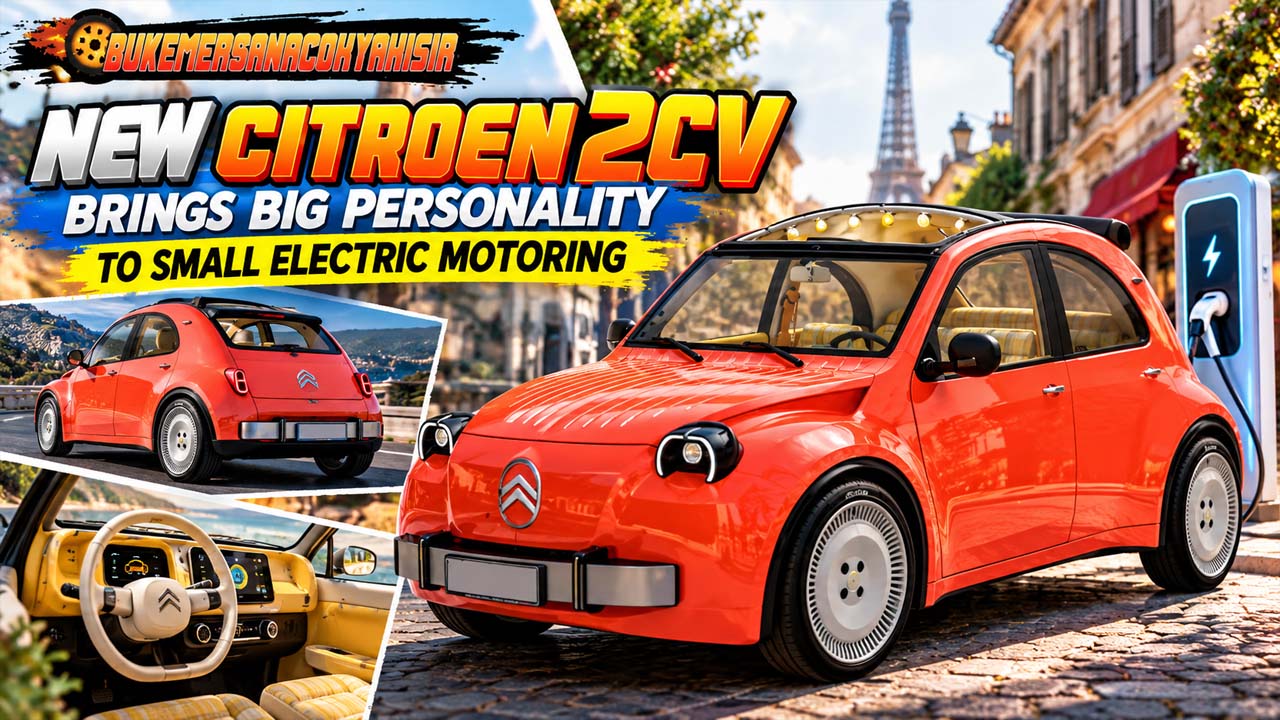
Bukemersanacokyakisir – The new Citroen 2CV brings a familiar name back into the conversation about affordable motoring. However, this revival looks toward electric mobility rather than recreating the original car mechanically. Unveiled as a concept, it previews a future model expected to join the range by 2028. Citroën is targeting a starting price around €15,000, rather than announcing a final showroom price. That distinction matters for buyers attracted by the suggested £12,700 equivalent. Nevertheless, the ambition is compelling. Instead of making another expensive statement vehicle, the brand wants to make everyday transport more accessible. The concept’s greatest promise lies in combining a modest budget with a personality that feels immediately welcoming.
Familiar Shapes Carry a Fresh Design Approach
Reviving a beloved car creates a difficult balancing act. Designers must preserve enough character to make the connection clear while giving the new model its own identity. Here, the rounded silhouette provides familiarity without copying every historical detail. Floating LED headlights and a prominent double-chevron badge create an expressive front end. Meanwhile, the rear lights sit higher beside the back window. The bonnet also carries distinctive indentations that connect the concept with its predecessor. Together, these choices suggest a thoughtful reinterpretation rather than a collection of decorative references. Visually, the result feels approachable. That could prove valuable for buyers who want an electric car with character but little interest in aggressive styling.
Compact Dimensions Keep Everyday Use in Focus
At 3.76 metres long, the concept is shorter than the original 2CV. That is an interesting decision when many familiar nameplates grow with each generation. Citroën also aims for a weight around 1,000 kilograms, although this remains a target. The appeal is easy to understand. A smaller vehicle can suit crowded streets and everyday journeys without demanding the footprint of a larger family car. However, exterior dimensions alone cannot confirm passenger comfort or luggage capacity. Those details will need closer examination when the production model emerges. For now, the proportions support the central idea: build around essential needs, then add charm through thoughtful design rather than unnecessary size.
Battery Range Remains an Open Question
The concept’s affordability depends partly on making sensible technical choices. A modest battery could support lower weight and cost, provided it meets the needs of intended buyers. However, Citroën has not supplied confirmed battery capacity or driving-range figures in the material available here. The suggested 170-mile range is an editorial estimate, not an official specification. Likewise, possible LFP batteries and Leapmotor technology should remain possibilities until the manufacturer confirms them. This leaves an important question unanswered: how much capability will buyers receive for the targeted price? A useful small EV needs more than an attractive entry figure. Charging convenience and dependable everyday range will help determine whether the proposal works beyond the motor-show floor.
Also Read : Cockroach Party Founder Freed as India Election Protests Intensify
A Simple Cabin Gives the Concept Its Character
Inside, the concept takes a more adventurous approach than its familiar exterior initially suggests. Instead of a conventional dashboard, a cylindrical structure supports the steering wheel, drive selector, and eight-inch touchscreen. The single-spoke wheel adds another connection with Citroën’s design history. Meanwhile, a slim display presents essential driving information ahead of the driver. The arrangement creates a cabin that appears playful without relying on numerous screens. Still, a clean appearance does not automatically guarantee easy operation. The production version will need controls that drivers can understand quickly. The strongest aspect of this interior is its intention: make the space inviting while keeping the everyday driving experience straightforward.
Removable Accessories Add Practical Personality
The cabin’s removable storage basket offers a charming alternative to a fixed centre console. Similarly, the portable sound system called Radioën extends the concept’s usefulness beyond the journey itself. These details suggest a car designed around ordinary activities, from carrying small purchases to enjoying a stop outdoors. Other touches are more whimsical, including egg-shaped storage and animal graphics on the pedals. Their success will depend on execution. Playfulness feels worthwhile when it improves enjoyment without complicating use. The concept appears to understand that balance. Rather than treating personality as an expensive trim package, it builds character into objects passengers can actually interact with during everyday travel.
Concept Features Still Face Production Decisions
Several details make the show car memorable, including distinctive graphics, playful sounds, and specially developed Michelin tyres. However, buyers should avoid treating every concept feature as guaranteed production equipment. Engineering requirements, manufacturing costs, and durability testing can influence the final design. That does not weaken the concept’s purpose. Instead, it highlights the challenge of delivering an affordable car without stripping away everything that makes it appealing. The most useful features deserve priority over visual novelty alone. Removable storage, clear controls, and welcoming materials could make a meaningful difference. Ultimately, the production model’s achievement will depend on how much of this thoughtful simplicity survives within the targeted budget.
The 2028 Target Sets Up a Bigger Affordability Test
A 2028 arrival would place the revival 80 years after the original 2CV’s introduction. The timing gives the project a strong historical connection, but its relevance depends on present-day needs. Many prospective EV buyers want manageable costs and practical transport more than exceptional acceleration. The new Citroen 2CV could address that audience if the finished car retains its accessible pricing ambition. However, purchase price is only part of ownership. Insurance, servicing, charging access, and efficiency also matter. The concept offers a persuasive starting point because its character supports a clear purpose. The next challenge is turning that promise into a production car whose everyday usefulness matches its appealing appearance.



Post Comment