Porsche 911 GT3 S/C Redefines Open-Top Driving with Pure Naturally Aspirated Performance
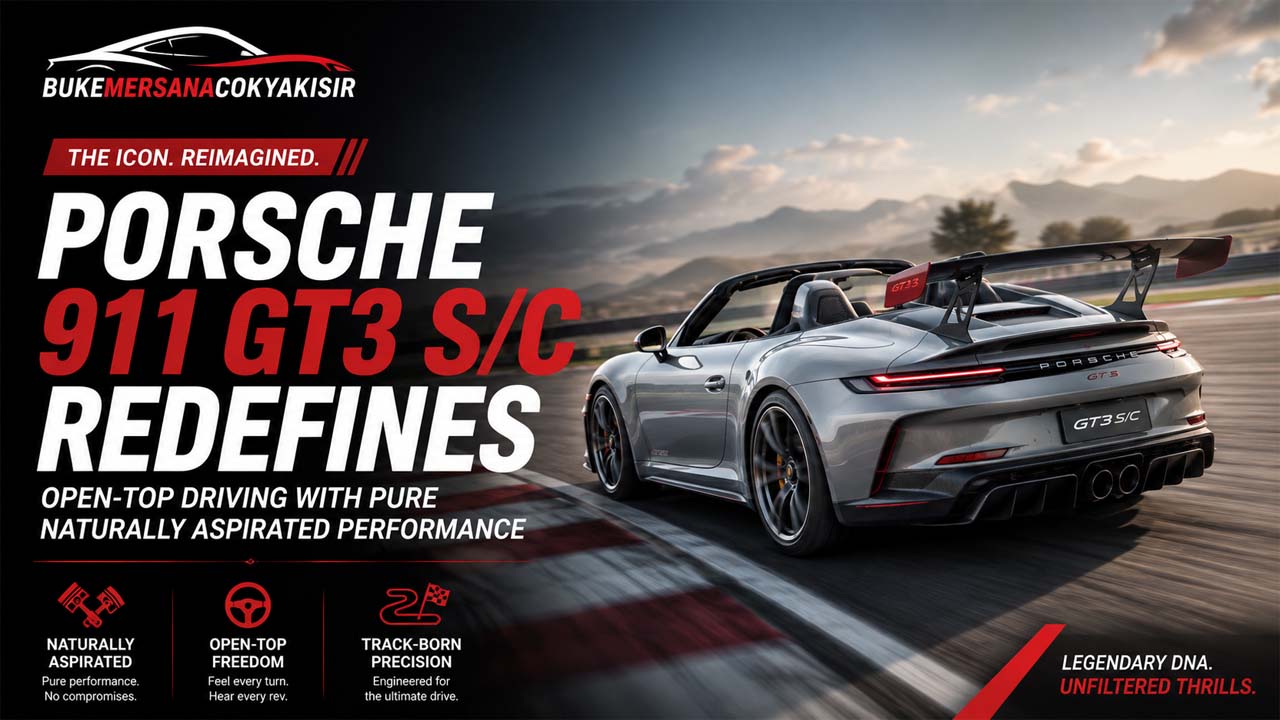
Bukemersanacokyakisir – The Porsche 911 GT3 S/C introduces a fresh interpretation of what a high-performance sports car can be. Instead of focusing solely on lap times, Porsche combines its legendary GT3 engineering with the thrill of open-air driving. The result is a convertible that preserves the character of a race-inspired machine while becoming more enjoyable on public roads. Although some enthusiasts questioned the idea of a roofless GT3, Porsche developed this model with the same attention to detail found throughout its GT division. Consequently, the 911 GT3 S/C offers an engaging experience that balances everyday usability with exceptional driving excitement.
A New Chapter for Porsche’s GT Performance Philosophy
For many years, Porsche GT models were designed primarily for drivers who wanted maximum track performance. However, customer preferences have gradually evolved. Many enthusiasts now seek a sports car that feels equally rewarding during weekend road trips and spirited mountain drives. As a result, Porsche created the GT3 S/C as a more road-focused alternative without sacrificing its motorsport DNA. Inspired by the success of the 718 Spyder RS and the GT3 Touring, the S/C demonstrates that emotional driving experiences are not limited to fixed-roof sports cars.
Lightweight Engineering Remains at the Heart of the GT3 S/C
Although the GT3 S/C features a convertible body, Porsche worked extensively to keep weight under control. Carbon-fiber doors, front fenders, and the bonnet significantly reduce mass while maintaining structural rigidity. Furthermore, magnesium center-lock wheels and standard carbon-ceramic brakes lower unsprung weight, improving both handling precision and braking performance. Even the soft-top roof incorporates lightweight magnesium components to enhance overall efficiency. Consequently, the car weighs only slightly more than the standard GT3 Coupe, proving that careful engineering can preserve performance despite additional structural reinforcement.
Also Read : Schiaparelli Opens Paris Haute Couture Week with a Lineup of Global Celebrities
The Legendary 9,000 RPM Flat-Six Continues to Shine
The centerpiece of the GT3 S/C is its naturally aspirated 4.0-liter flat-six engine. Producing 503 horsepower, the engine delivers immediate throttle response without relying on turbochargers. More importantly, it revs all the way to an exhilarating 9,000 rpm, creating one of the most memorable soundtracks in the automotive world. At lower speeds, the engine produces a deep mechanical growl. As the revs climb, however, the sound transforms into an unmistakable metallic scream. Therefore, lowering the roof becomes an essential part of enjoying everything this remarkable powertrain has to offer.
Manual Transmission Delivers Maximum Driver Engagement
Unlike many modern performance cars that prioritize automatic gearboxes, the GT3 S/C remains committed to a traditional six-speed manual transmission. Every shift requires deliberate driver input, creating a stronger connection between driver and machine. Furthermore, Porsche shortened the gear ratios to improve acceleration and responsiveness during spirited driving. Although second gear still reaches impressive speeds, the manual gearbox encourages active participation throughout every journey. Consequently, every corner, downshift, and acceleration feels more rewarding than relying on paddle-operated transmissions alone.
Open-Top Driving Without Sacrificing Chassis Precision
Some critics expected the convertible version to lose the precision associated with the GT3 name. Fortunately, that concern quickly disappears behind the wheel. Porsche reinforced the chassis with advanced structural components that virtually eliminate unwanted body flex. As a result, steering remains sharp, suspension movements stay composed, and cornering confidence remains exceptionally high. The double-wishbone front suspension, combined with adaptive chassis tuning, allows the GT3 S/C to maintain remarkable balance while still absorbing imperfect road surfaces comfortably. Consequently, the driving experience feels every bit as authentic as its coupe sibling.
A Premium Cabin Designed Around the Driving Experience
Inside the cabin, Porsche continues its driver-focused philosophy with a clean yet premium layout. The latest infotainment system delivers crisp graphics, faster responses, and improved connectivity without distracting from the driving experience. Carbon-fiber trim, lightweight carpets, and fabric door pulls reinforce the GT identity, while optional carbon bucket seats provide outstanding support during enthusiastic driving. Additionally, Porsche replaces the rear seats with useful storage space, making the GT3 S/C surprisingly practical for weekend touring despite its uncompromising performance credentials.
Premium Pricing Reflects Exclusive Engineering and Equipment
The Porsche 911 GT3 S/C enters the market as one of the brand’s most exclusive sports cars. Although its starting price exceeds many competitors, buyers receive an impressive amount of lightweight technology and premium equipment as standard. Optional customization through Porsche Exclusive Manufaktur allows nearly every vehicle to become unique, from bespoke paint finishes to handcrafted interior materials. Therefore, the GT3 S/C appeals not only to performance enthusiasts but also to collectors seeking a distinctive addition to their garages.
The GT3 S/C Successfully Blends Road Comfort with Motorsport Character
The Porsche 911 GT3 S/C demonstrates that a convertible can still embody the spirit of Porsche’s celebrated GT division. It combines lightweight engineering, naturally aspirated performance, and manual driving involvement without compromising everyday usability. While the fixed-roof GT3 remains the ultimate choice for dedicated track enthusiasts, the S/C introduces a different type of excitement that emphasizes emotion, sound, and open-air freedom. Ultimately, Porsche has created a sports car that feels equally thrilling on winding country roads as it does on scenic coastal highways, proving once again that driving pleasure can evolve without losing its core identity.