New Hyundai Tucson Hybrid Brings Bold Design and Everyday Practicality
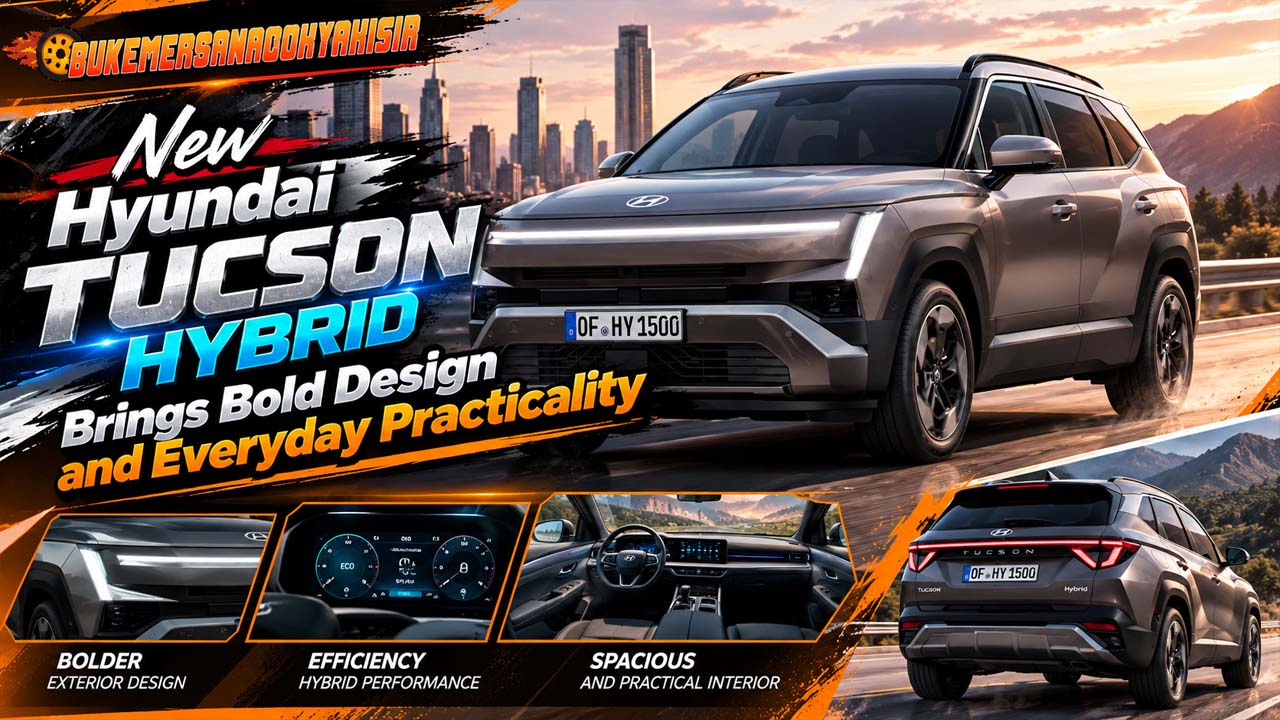
Bukemersanacokyakisir – The new Hyundai Tucson hybrid takes a more assertive approach to family SUV design. Hyundai describes the model as its boldest SUV, pairing muscular bodywork with electrified powertrains and updated cabin technology. However, the appeal extends beyond its appearance. The redesign also addresses passenger comfort, access and everyday usability. Imagine approaching the Tucson in a supermarket car park: its angular silhouette makes an immediate impression. Once inside, though, the more important question becomes whether those dramatic changes make ordinary journeys easier.
Art of Steel Gives the Exterior a Different Character
Hyundai’s Art of Steel design language gives the Tucson pronounced wheel arches, crisp lines and a substantial-looking body. Horizontal lighting reinforces its width, while the rear lamps add a technical finish. Together, these elements create a more imposing appearance than a softly rounded crossover. In my view, the strongest feature is the contrast between prominent arches and relatively restrained door surfaces. It gives the design a clear focal point. Nevertheless, rugged styling alone does not establish off-road capability. Buyers should assess the relevant drivetrain and equipment separately.
Larger Dimensions Bring Practical Changes
The European model measures 4,560 mm long, 1,900 mm wide and 1,670 mm tall. Compared with its predecessor, it grows by 35 mm in length and width, plus 20 mm in height. These changes support additional cabin space and a stronger road presence. Meanwhile, wider-opening doors should make access easier. That detail matters when helping a child into a seat or carrying bags into the cabin. However, extra width also deserves attention when assessing a narrow garage or familiar parking space.
A Large Touchscreen Shares Space with Physical Controls
Inside, the Tucson offers a central touchscreen measuring either 12.9 or 17 inches, depending on specification. A slim 9.9-inch instrument display presents driving information separately. Importantly for daily usability, physical buttons remain beneath the main screen. Their presence could make frequently used functions easier to reach without exploring several menus. Still, screen size does not tell the whole story. Clear graphics, sensible menu organisation and responsive operation will matter just as much. Those qualities need assessment in real use rather than through promotional images.
AI Connectivity Needs to Deliver Simple Everyday Benefits
Pleos Connect brings updated infotainment, with Gleo AI supporting voice interaction. The useful question is how naturally the system handles routine requests. Setting a destination or finding information should feel straightforward, particularly during an unfamiliar journey. Nevertheless, an AI label does not automatically guarantee accurate responses or effortless operation. Connected features may also depend on service availability and market specification. My view is that the best cabin technology reduces effort. A system earns its place when it helps occupants complete simple tasks with fewer distractions.
Also Read : Chinese Judoka Disqualified After Allegedly Biting Opponent During Match
Comfort Features Give the Cabin a Softer Side
The exterior looks angular, but Hyundai takes a softer approach to cabin surfaces. Cushioning across the dashboard, doors and centre armrest aims to create a more comfortable environment. Depending on specification, available seats offer massage or relaxation functions. These additions could prove appealing during long journeys and scheduled breaks. However, seat support and driving position remain more important than a lengthy equipment list. A brief showroom visit may reveal whether the controls suit the driver. A longer test drive should provide a better impression of comfort.
Hybrid and Mild-Hybrid Versions Are Different Choices
The European range includes a 1.6-litre turbocharged petrol engine, a 48V mild-hybrid option, a hybrid and a plug-in hybrid. These labels describe different levels of electrification. The hybrid produces 245 PS, approximately 242 bhp, and 380 Nm of torque. It should therefore be distinguished from the lower-output mild-hybrid petrol version. This difference matters when comparing brochures and prices. Two vehicles carrying hybrid-related badges may offer substantially different driving characteristics. Buyers should check the complete powertrain description rather than relying on the badge alone.
The Plug-In Hybrid Adds a Charging Requirement
The Tucson plug-in hybrid produces up to 292 PS, approximately 288 bhp, and uses a 17.1 kWh battery. Hyundai estimates up to 81 km of electric-only range with 17-inch wheels, subject to final homologation. Actual range will depend on conditions and use. For someone with convenient charging, that capability could cover many routine journeys electrically. However, the ownership calculation changes when charging is difficult or infrequent. A plug-in hybrid deserves consideration alongside the owner’s parking arrangements, driving distances and electricity costs.
Driver Assistance Supports Rather Than Replaces Attention
Available assistance includes collision-avoidance technology, speed-limit support and navigation-based smart cruise control. These systems can help manage specific driving tasks within their operating limits. Nevertheless, the driver remains responsible for observing traffic and responding appropriately. Equipment also varies by specification, so buyers should confirm what their chosen version includes. In practical terms, clear warnings and predictable operation matter more than the number of feature names. A useful test drive should explore how the assistance behaves on the roads the owner regularly uses.
Everyday Usability Will Decide the Tucson’s Appeal
The new Hyundai Tucson hybrid presents a compelling combination of distinctive styling, electrified power and cabin convenience. Yet its strongest case will depend on how those elements work together in everyday driving. Families need accessible seats, manageable controls and sufficient space for their routines. Meanwhile, hybrid buyers need realistic running-cost expectations. In my view, the redesign becomes convincing when its practical improvements match its visual confidence. The next step is a proper driving assessment, with particular attention to ride comfort, powertrain refinement and fuel consumption.

Post Comment