Renault E-Space Concept Brings Back the Classic MPV Spirit
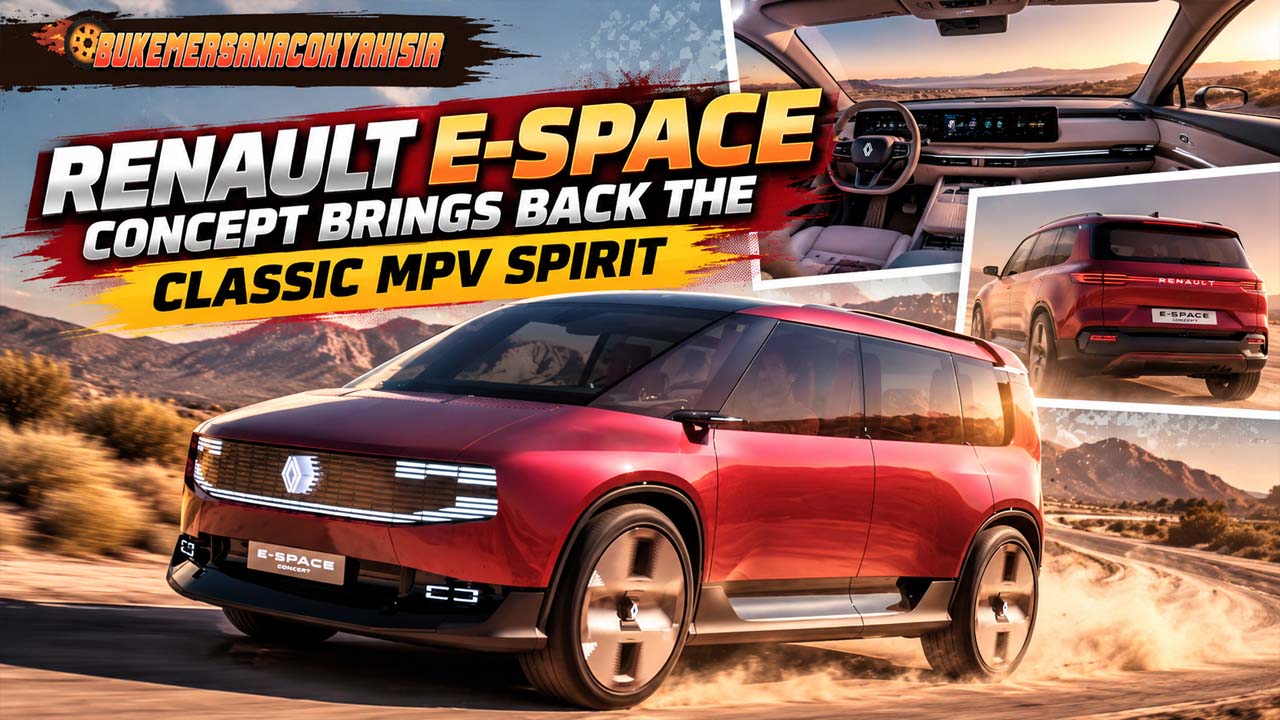
Bukemersanacokyakisir – A family car earns its place through everyday moments: carrying passengers, fitting luggage, and making shared journeys feel comfortable. The Renault E-Space electric MPV concept revisits that practical appeal through a distinctly boxy shape. Although a modern Espace already exists, its SUV identity takes a different direction from the original people carrier. This concept brings the conversation back to space and the experience of travelling together. However, it remains a design vision rather than a confirmed production model. That distinction matters. Renault is exploring how the Espace spirit could evolve, while leaving many details about the finished vehicle open.
The Original Espace Provides More Than a Name
Renault introduced the original Espace in 1984. More than four decades later, the company describes E-Space Concept as a reboot of its spirit. The emphasis falls on people, emotion, and the experience inside the vehicle. Consequently, the project carries a broader ambition than simply reviving a familiar badge. It asks what a modern people carrier should offer when family needs remain important but vehicle technology changes. From a design perspective, that is an appealing starting point. A recognisable name gives the concept a connection to the past, while its electric direction creates room for a different interpretation.
A Boxy Silhouette Puts Practicality Back in Focus
The concept measures 4.7 metres long and adopts a shape that recalls a spacious container. Its upright appearance gives it a clear visual link to traditional MPVs. However, exterior proportions alone cannot confirm passenger capacity or luggage volume. Renault has not supplied those figures in the available information. Even so, the silhouette makes the intended direction easy to understand. Rather than relying on a sporty outline, the concept suggests an emphasis on usable space. For families, that promise could be meaningful. The real test would come through cabin dimensions, access, seating flexibility, and the ease of carrying everyday belongings.
Bold Lighting Gives the Concept a Modern Identity
U-shaped lighting is part of the concept’s stated design language at the front and rear. Meanwhile, large wheels, a substantial stance, and a small roof spoiler add visual drama. These details help the vehicle feel contemporary without abandoning its boxy character. However, concept styling does not necessarily preview every feature of a production car. Wheel sizes and decorative elements could change if the project moves forward. From an editorial perspective, the strongest feature is the overall shape. It communicates the people-carrier idea immediately. The lighting then gives that familiar format a more distinctive and modern expression.
E-Tech Electric Power Leaves Important Questions Open
Renault identifies E-Tech electric technology as the concept’s powertrain direction. That establishes its electric identity, but it does not provide a complete specification. Battery capacity, motor output, driving range, and charging performance remain unspecified in the supplied information. Therefore, suggestions about an LFP battery or particular charging capabilities should remain expectations rather than confirmed features. This matters because technical details will shape how useful the vehicle could become. A family-focused electric MPV needs more than an attractive silhouette. Its eventual appeal would also depend on how comfortably its range and charging arrangements fit the journeys its owners make.
Also Read : Jim Bakker Dies at 86 After Decades in Televangelism
Passenger Experience Gives the Project Its Strongest Purpose
Renault places human experience at the centre of its explanation for E-Space Concept. That focus suits a vehicle whose appeal rests on bringing people and belongings together. However, the available information does not reveal the seating arrangement or specific cabin features. Any discussion of a flexible interior must therefore remain a design expectation. From a practical standpoint, thoughtful storage and easy access could matter as much as digital features. Consider a family loading bags before a weekend trip. Their experience depends on simple, useful details. A future Espace would make its strongest case by addressing those ordinary needs with care.
ID. Buzz and Kia PV5 Offer a Useful Comparison
The concept’s boxy appearance invites comparisons with vehicles such as the Volkswagen ID. Buzz and Kia PV5. These references help explain its general design direction, rather than proving equivalent dimensions or capabilities. Importantly, the Renault remains a concept, so a full comparison would be premature. There is no confirmed price, passenger configuration, or range figure in the supplied details. Nevertheless, the comparison raises an interesting question: how could Renault give an electric people carrier a distinctive identity? Its Espace heritage provides one answer. Yet practical advantages would need to emerge through the finished vehicle, beyond the familiarity of its name.
A Production E-Space Would Need to Deliver Everyday Value
The Renault E-Space electric MPV concept offers an inviting interpretation of a familiar family-car idea. It combines the original Espace spirit with electric technology and a modern visual identity. However, Renault has not provided a production timetable in the information available here. The next meaningful developments would be clearer cabin details, technical specifications, and confirmation of the project’s future. Until then, its appeal lies in the direction it proposes. From an editorial viewpoint, a convincing revival would make shared travel easier through useful design. The boxy silhouette opens that conversation; the eventual passenger experience would determine how far it goes.
Post Comment