Gordon Murray S1 Revives the McLaren F1 Spirit for a New Generation
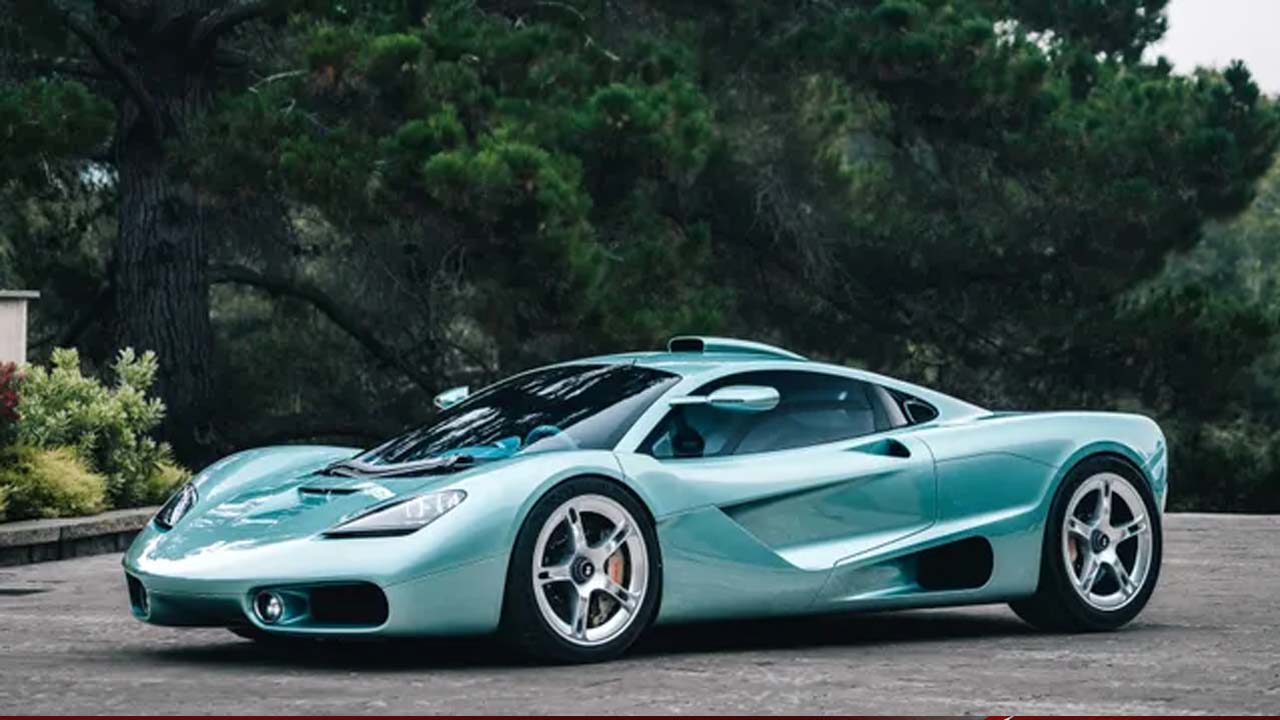
Bukemersanacokyakisir – The Gordon Murray S1 arrives with an unmistakable mission. Rather than chasing extreme wings or headline-grabbing technology, it celebrates the philosophy behind the legendary McLaren F1 road car. That immediately gives this new machine an unusually emotional identity. Developed by Gordon Murray Special Vehicles, the S1 takes inspiration from a period when lightness, driver involvement, and mechanical purity shaped the supercar experience. However, this is not simply an old design recreated with modern materials. Instead, Murray has reinterpreted those principles for today’s roads. A naturally aspirated V12 sits behind the cabin, while a manual transmission keeps the driver deeply involved. Meanwhile, its cleaner body distinguishes it from the more aggressive S1 LM. For enthusiasts who value feel over lap-time statistics, this approach matters. The S1 therefore feels less like another hypercar project and more like a carefully considered continuation of Murray’s most famous automotive ideas.
S1 LM Provided the Foundation for Something Different
To understand the S1, it helps to look at the S1 LM first. Revealed a year earlier, that machine was conceived as a modern interpretation of the 1995 McLaren F1 LM. Its character was intentionally intense. The S1 LM combined a central driving position, six-speed manual transmission, and high-revving V12 with race-inspired aerodynamics. Production was limited to only five cars, making it exceptionally exclusive. The first example reportedly sold for more than $20 million at auction in late 2025. Nevertheless, customer interest revealed another opportunity. Some buyers admired the underlying engineering but wanted less visual aggression. That demand helped shape the Gordon Murray S1. Consequently, the newer car retains much of the LM’s mechanical foundation while moving toward a touring-focused personality. It is still exotic and extremely rare. Yet its priorities are subtly different. Rather than appearing ready for a starting grid, the S1 looks designed for memorable journeys on real roads.
Cleaner Bodywork Recalls the Original McLaren F1
Perhaps the biggest visual difference appears in the bodywork. The Gordon Murray S1 removes the S1 LM’s prominent rear wing, front splitter, and dramatic side skirts. As a result, its silhouette looks remarkably clean. That simplicity is deliberate because the original McLaren F1 road car followed a similar philosophy. Interestingly, almost every carbon body panel is unique to the S1. Only the roof and engine cover remain shared with the S1 LM. The headlights have also been redesigned. Meanwhile, circular lamps positioned within the front bumper intakes reference Murray’s 1992 McLaren F1 Monaco show car. Newly designed wheels continue that historical connection without turning the vehicle into a retro replica. This balance is arguably one of the S1’s strongest qualities. Designers often struggle when paying tribute to celebrated cars because nostalgia can overpower originality. Here, the references appear carefully controlled. The result feels familiar to enthusiasts while still belonging to the modern Gordon Murray era.
Road-Focused Engineering Changes the S1’s Character
Removing aerodynamic hardware alone would not have created the desired touring experience. Therefore, engineers also changed several components beneath the body. The Gordon Murray S1 maintains the S1 LM’s overall width, track, tyre dimensions, and suspension architecture. However, its ride height increases by 10mm. More compliant damper settings should also make difficult road surfaces easier to manage. In addition, switchable power steering allows the steering assistance to suit different driving situations. New dihedral doors feature proper drop-down windows, another useful improvement for everyday usability. Despite its cleaner exterior, aerodynamic management remains important. Active aero is integrated into the rear diffuser to maintain stability as speed rises. Naturally, it cannot generate the same downforce as the wing-equipped S1 LM. That is not its purpose. Instead, the system aims to preserve aerodynamic balance without disturbing the elegant exterior. Consequently, the S1 promises a less intimidating experience while retaining serious performance capability.
Also Read : Married at First Sight Alum Ryan De Nino Dies at 40
A 12,100rpm Cosworth V12 Remains the Star Attraction
Modern performance cars increasingly rely on turbocharging and electrification. The Gordon Murray S1, however, takes a dramatically different path. Behind the cabin sits a 4.2-litre naturally aspirated Cosworth V12. It can rev to an extraordinary 12,100rpm while producing 681bhp and 367lb ft of torque. More importantly, engineers recalibrated the engine to deliver maximum torque from only 2,500rpm. That change supports the car’s more relaxed touring character. Drivers should not need to chase the upper reaches of the rev counter during every journey. Nevertheless, the spectacular high-rpm experience remains available when the road allows it. There is also something increasingly special about this configuration. Large naturally aspirated engines are disappearing as manufacturers pursue lower emissions and electrified performance. Therefore, a lightweight supercar with a high-revving V12 now feels almost rebellious. Rather than competing through enormous horsepower figures, Murray continues to focus on response, sound, weight, and the relationship between driver and machine.
Six-Speed Manual Keeps the Driver at the Centre
Power is only part of the experience because the transmission remains equally important. The S1 uses a six-speed manual gearbox, reinforcing Gordon Murray’s preference for direct mechanical interaction. Additionally, sixth gear receives a longer touring ratio as standard. That should make sustained highway driving calmer without weakening the character of the lower gears. This philosophy separates the Gordon Murray S1 from many contemporary supercars. Dual-clutch transmissions can change gears far faster than any human. However, speed is not necessarily the only measure of enjoyment. A manual transmission asks the driver to participate in every acceleration sequence. Timing, clutch control, and gear selection become part of the journey. The S1 therefore prioritizes engagement instead of simply reducing shift times. Furthermore, the central driving position strengthens that connection. Murray has spent decades refining this concept, and the arrangement remains one of his defining signatures. In an increasingly automated performance-car market, such mechanical involvement gives the S1 a distinctive identity.
Extraordinary Details Turn Engineering Into Automotive Art
Open the engine compartment and the S1’s obsessive attention to detail becomes even clearer. Its naturally aspirated V12 is surrounded by components designed to function beautifully while also looking extraordinary. A polished Inconel exhaust system provides one of the visual highlights. Meanwhile, 24-carat gold heat shielding recalls a famous engineering detail associated with the McLaren F1. Yet these touches are not included merely for nostalgia. Gold is highly effective at reflecting radiant heat, while Inconel offers excellent resistance to extreme temperatures. Therefore, the materials combine engineering purpose with visual theatre. This philosophy extends throughout the Gordon Murray S1. Instead of hiding mechanical components behind large decorative covers, the car celebrates them. That approach feels particularly appropriate for a vehicle aimed at collectors who appreciate engineering as much as outright performance. In many modern cars, technology becomes increasingly invisible. The S1 takes the opposite route. It makes the machinery part of the ownership experience, reinforcing the sense that every component deserves attention.
Only 64 Examples Will Make the S1 Exceptionally Rare
The S1 will remain an uncommon sight, although production is significantly larger than the five-car S1 LM program. Gordon Murray Special Vehicles plans to build 64 examples. For perspective, the T.50 was limited to 100 road cars, while only 25 examples of the track-focused T.50s were planned. Murray acknowledged that 64 cars represent a relatively large production run for the Special Vehicles division. However, he also described the S1 as an exception because of what the project represents. Customer demand reportedly played a major role in its creation. Enthusiasts wanted the underlying S1 LM formula without its more aggressive aerodynamic treatment. Unfortunately for prospective buyers, every Gordon Murray S1 has already been allocated. Pricing has not been publicly disclosed in the supplied information. Still, its rarity, bespoke engineering, and relationship with the McLaren F1 philosophy place it firmly within the highest levels of collectible performance cars.
S1 Shows Why Purist Supercars Still Matter
The automotive industry is entering an era dominated by electrification, sophisticated software, and astonishing power figures. Against that background, the Gordon Murray S1 follows a refreshingly different route. Its appeal comes from a naturally aspirated engine, manual gearbox, lightweight construction, and carefully tuned chassis. More importantly, every major decision appears centered on the driving experience. The McLaren F1 influence is impossible to ignore, yet the S1 does not need to imitate the past completely. Instead, it translates familiar principles into a modern touring supercar. That distinction gives the project credibility. Heritage works best when it inspires new engineering rather than becoming a styling exercise. With only 64 examples planned and every car already spoken for, most enthusiasts will never experience one from the driver’s seat. Even so, the S1 sends an important message. In a world obsessed with bigger numbers, simplicity, balance, and mechanical interaction can still make a supercar genuinely extraordinary.



Post Comment